
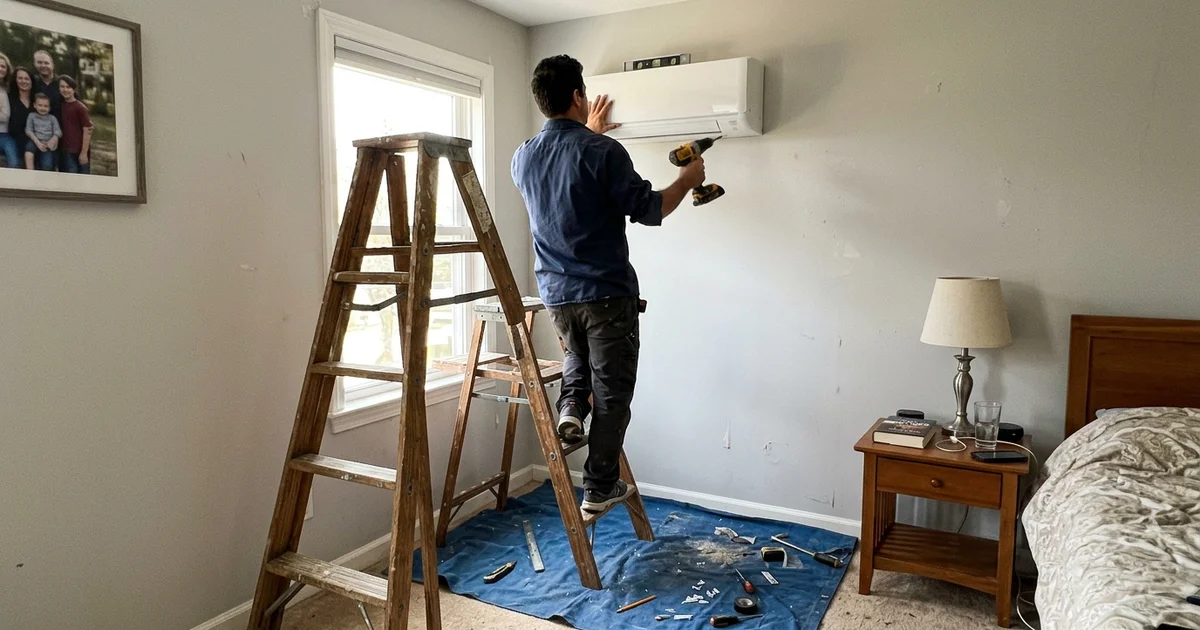
Planning a Ductless Budget
We know how frustrating it is when a room is too hot to use, especially during a brutal summer on the coast. You have probably realized by now that relying on a central air system just does not work for every single space. Finding an accurate mini split cost alabama homeowners can actually trust is often the hardest part of the upgrade.
This guide breaks down exactly what drives those numbers up or down. We will look at real-world data and explore a few practical ways to keep your project on budget. To get your actual number without the guesswork, request a free mini-split estimate.
General ranges only
Foley AC Repair does not set prices. These are broad, typical Alabama ranges for planning. Equipment, labor and electrical costs change, and every home is different. Your contractor’s written quote is the price that counts.
General Alabama Ranges
Single-zone system (one indoor head, one outdoor unit). Installed prices typically range from $3,500 to $5,500 depending on size and efficiency details. For a typical room like a sunroom or garage, this configuration offers the most direct cooling solution. Our teams regularly install these compact units in a single afternoon. The ductless mini split installation cost usually drops slightly for basic 9,000 BTU systems. You will see higher numbers for 24,000 BTU models meant to cool large open spaces.
Multi-zone system (two to four heads). Installed prices often run roughly $6,500 to $16,000 or more, depending on the number of zones, head types and the length of line sets. The average multi zone mini split cost scales directly with how much copper piping the job requires. We highly recommend mapping out your zones carefully before requesting quotes. A three-zone setup averages around $9,500 to $13,500 locally.
Whole-home multi-zone. Larger systems serving an entire home without ducts can go higher, sometimes in the same range as or above a central system. Whole-house coverage usually starts at $12,000 and can easily reach $20,000 for premium brands. Our larger projects often utilize a single 48,000 BTU outdoor unit to run five separate rooms. This centralized approach saves exterior space.
| System Configuration | Typical 2026 Installed Range |
|---|---|
| Single-Zone (1 Room) | $3,500 - $5,500 |
| 2 to 3 Zones | $6,500 - $13,500 |
| 4+ Zones (Whole Home) | $12,000 - $20,000+ |
Repairs and cleaning. Mini-split repairs vary by part. Professional cleaning of the indoor head and coil is a smaller cost and worth doing yearly in humid homes and rentals. We suggest scheduling an annual deep clean to prevent the blower wheel from packing with dust. Regular maintenance keeps the mini split price of ownership low over its 15-year lifespan.
What Drives the Cost
Number of zones and head types
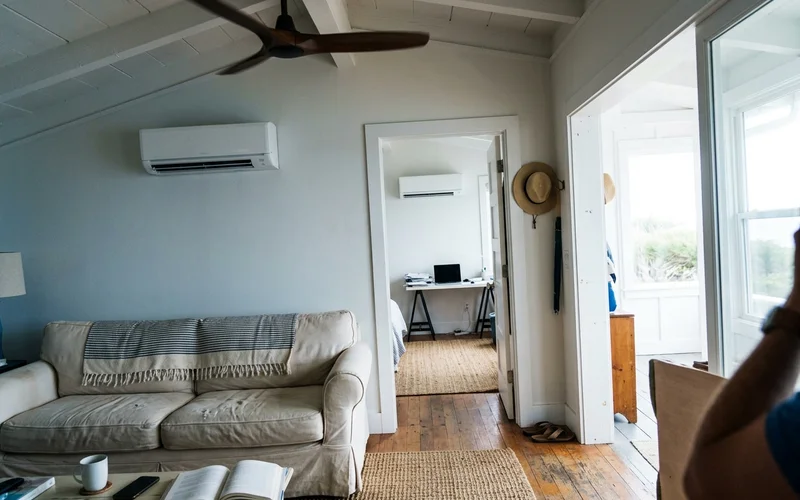
Every indoor head adds equipment and labor. Wall-mounted heads are usually the least expensive and represent roughly 70% of residential installs. We find that standard wall units keep the project budget friendly at around $3,500 to $5,500 per zone.
Ceiling cassettes and concealed ducted units cost more but look cleaner. A ceiling cassette sits flush against the ceiling and provides 360-degree airflow. Our installers have to ensure there is about 22 inches of cavity clearance in your attic to mount them. This recessed design pushes the per-zone price up to $4,500 to $7,000.
Capacity and efficiency
Larger capacity costs more. Higher SEER2 and HSPF2 ratings also cost more upfront but save on running costs, which matters on the coast where cooling runs most of the year. We always point out that Alabama requires a minimum of 14.3 SEER2 for compliance.
Upgrading to an 18 SEER2 or 20 SEER system usually qualifies you for utility rebates. For example, Alabama Power offers up to a $1,000 rebate in 2026 if you are replacing an older gas unit with a high-efficiency electric heat pump. Our team also helps customers in northern counties claim TVA EnergyRight rebates up to $800. Proper sizing is just as important as the efficiency rating.
Line set length and routing
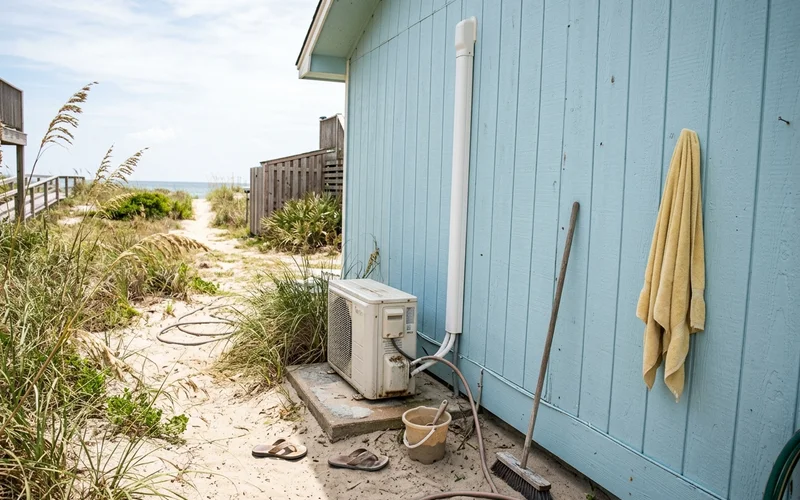
The line set carries refrigerant between the indoor and outdoor units. Longer runs, runs through multiple floors, or runs that need to be hidden inside walls add cost. Our pricing typically accounts for standard 15-foot to 25-foot line runs.
Going beyond that distance usually adds $3 to $8 per additional foot for the copper tubing and labor. A neat line set cover along the siding is common and protects the lines from sun and weather. We install premium PVC covers, like Slimduct or Comfort Kool, which add about $100 to $150 to the materials but prevent UV damage. These durable covers blend in perfectly with your exterior.
Electrical work
Most mini-splits need a dedicated circuit and an outdoor disconnect. If your panel has space, this is straightforward. We work alongside licensed electricians to ensure this step meets all local codes. If the panel is full or outdated, an upgrade adds cost. A full electrical panel upgrade in South Baldwin typically runs between $1,500 and $2,500.
Mounting and placement
Wall brackets, raised pads, and mounting on raised beach homes or condo balconies can add labor. Near the water, some owners choose coastal-rated outdoor units or protective coatings. Our installations near the Gulf often utilize Daikin systems featuring special coastal-protect coil treatments.
Mitsubishi also offers SeaCoast models that use an epoxy resin-coated fan motor and Blue Fin heat exchanger. These treated models prevent the salt air from dissolving the aluminum fins within the first three years.
Condensate drainage
Indoor heads need a way to drain water. Where gravity drainage is not possible, a condensate pump is added. We frequently use low-profile pumps from brands like Aspen or Little Giant for interior walls. Adding a mechanical pump generally increases the labor and material cost by $150 to $300 per zone.
Condo requirements
HOA rules may specify where outdoor units can go and how they are mounted. That can affect line set length and labor. Our project managers always review Architectural Review Board (ARB) guidelines before drilling. Many beachfront condos also mandate heavy-duty vibration isolation pads to stop compressor noise from traveling through shared walls.
Mini-Split vs Other Options
Before choosing, it is worth comparing alternative cooling strategies. We want you to have all the facts before making a financial commitment. Consider these standard alternatives:
- Extending existing ductwork can be cheaper if the central system has spare capacity and ducts are easy to reach, but it often does not work for sunrooms and garages. Custom ductwork modifications typically cost $1,000 to $2,500, while a ductless system avoids this messy teardown.
- Window or portable units are cheap upfront but noisy, less efficient and a poor fit for long-term use in the humid South. A heavy-duty window unit only lasts 5 to 7 years, whereas a properly maintained ductless unit lasts 15 to 20 years.
- Replacing the central system may make sense if it is old and undersized for the whole house.
See where mini-splits fit for help deciding if ductless is right for your space.
Running Costs and Efficiency
The purchase price is only part of the cost. Mini-splits are among the most efficient ways to cool and heat a single room or zone, because they avoid duct losses and use inverter compressors that slow down instead of switching on and off. Our customers often ask exactly how much their monthly electric bill will change. Based on state averages, running a single zone system in Alabama costs roughly $39 to $45 per month.
A few things affect what you pay to run one:
- SEER2 and HSPF2 ratings. Higher ratings cost more upfront and less every month. With the long coastal cooling season, efficiency pays back faster here than in cooler states.
- Right sizing. An oversized head short cycles, wastes power and does a poor job with humidity. We rely on ACCA Manual J load calculations to size the equipment precisely to your square footage and sun exposure.
- Settings. Setting a system a few degrees higher, using dry mode on humid mild days, and turning off zones in empty rooms all cut costs. Dry mode is incredible because it removes sticky moisture without drastically dropping the room temperature.
- Clean filters and coils. Dirty indoor filters and coils make the system work harder. Rinse washable filters every few weeks in heavy use.
For rental owners, a multi-zone system lets each bedroom run only when guests are using it, which can save money compared with cooling an entire house for one occupied room. We see a lot of local vacation hosts cut their summer utility overhead by 30% using this zoned approach.
How to Compare Quotes
A clear quote should list:
- Brand and model of the outdoor unit and each indoor head
- Capacity of each zone and how it was sized
- SEER2 and HSPF2 ratings (Check for an AHRI-certified match number to prove the units belong together)
- Line set length, cover and routing
- Electrical work, including circuit and disconnect
- Condensate drainage method
- Warranty terms for parts and labor
Our own estimates always break these line items down so you can see exactly where your budget goes. You should never accept a flat price written on the back of a business card. Professional installers will stand behind a detailed, itemized contract.
Get a Free Estimate
Call (251) 270-2500. We connect you with a licensed, insured contractor who installs mini-splits across South Baldwin.
The site visit and quote are free, and there is no referral fee. Our local partners are ready to help you plan the perfect ductless layout today. Getting started is the best way to lock down your mini split cost alabama style.