
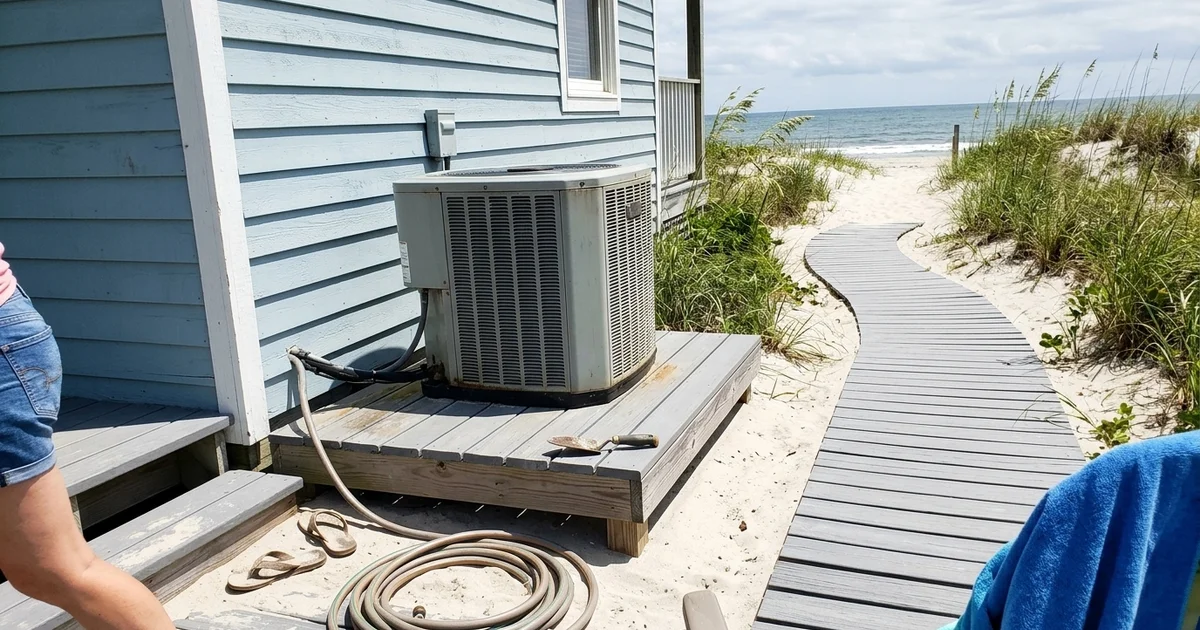
Our team sees standard AC units fail in just five to eight years along the Gulf Coast. The constant breeze carries microscopic salt deposits inland every single day. That heavy salt load destroys unprotected aluminum fins and copper tubing very quickly.
We know that upgrading to a coastal rated ac condenser is the most reliable way to get a normal 15-year lifespan out of your equipment.
This label refers to a specific package of factory upgrades designed to resist rust. Knowing exactly what is included helps you compare options and decide if the investment makes sense.
Our technicians recommend reviewing the warranty details before making a final decision. If you are ready to look at options, ask for a free quote on AC replacement in Foley. Let’s look at the data on corrosion and outline a clear plan for your next system.
What “Coastal-Rated” Means
We define a coastal unit as an air conditioner built with specialized coatings and hardware to withstand severe salt exposure. These systems are engineered to prevent galvanic corrosion. This destructive process happens when salty moisture bridges the gap between copper tubing and aluminum fins.
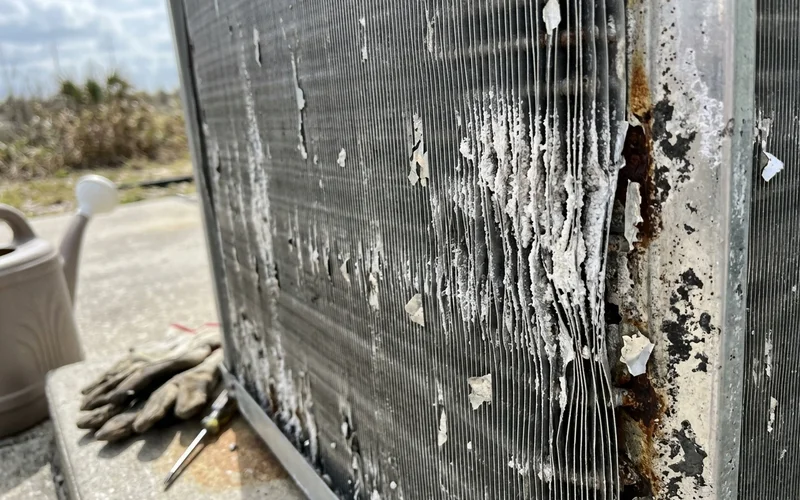
Our daily service calls prove that salt air is incredibly hard on standard equipment, which is why a coastal rated ac condenser is often necessary. An unprotected system will pull in moisture and lose up to thirty percent of its efficiency before the aluminum fins literally crumble away. The cabinet rusts, screws seize, and wiring terminals degrade long before the internal compressor actually fails.
We track the typical degradation of standard units in South Baldwin closely. Without coastal protection, the decline happens in a predictable pattern:
- Year 2: Aluminum fins beginning to pit and show a white salt crust.
- Year 4: Efficiency dropping as crumbling fins restrict airflow.
- Year 6: Refrigerant leaks developing in weakened copper lines.
- Year 8: Total system failure requiring complete replacement.
A true coastal ac unit prevents this fast decline and protects your investment.
The Main Features of a Coastal Unit
We look for four main upgrades in a true coastal system: coated coils, upgraded cabinets, stainless hardware, and sealed electrical parts. These features work together to block moisture and prevent rust. Let us break down exactly what these upgrades entail.
Coil coatings
Our technicians consider the coil coating to be the most critical feature of any beach-friendly system. The condenser coil is where the heat transfer happens, so it requires the strongest defense against salt. When comparing an ac coil coating, salt air resistance is the primary metric to check.
We always recommend factory-applied treatments over field sprays because they provide superior protection. Manufacturers use proven technologies like ElectroFin E-Coat, a micro-thin epoxy bath, or Heresite P-413, a baked phenolic layer, to seal out moisture. A factory dip ensures the coating reaches deep inside the coil where aftermarket spray wands simply cannot reach.
Corrosion-resistant cabinets
Our preferred coastal models feature heavy-duty galvanized steel cabinets. These tough exteriors receive extra layers of powder paint to seal out the corrosive Gulf breeze. The base pans are also specifically stamped to drain salty rainwater rather than letting it pool around the compressor.
Better fasteners and hardware
We appreciate the stainless steel screws used on premium coastal models. Rusted screws on a standard unit will seize up completely within three years near the water. That rust causes severe secondary issues:
- Making routine maintenance panels impossible to remove.
- Allowing rainwater to seep into the sensitive electrical compartment.
- Accelerating the degradation of the surrounding cabinet.
Protected electrical parts
Our repair teams frequently replace corroded contactors on standard systems. Coastal units solve this problem by enclosing the control boards in weather-proof casing. Many models also feature sealed relays to keep the salty humidity away from the raw electrical connections.
Placement matters as much as the unit
We advise homeowners to think carefully about where the equipment sits. Even the best coastal unit lasts longer when it is protected from the direct Gulf wind. You should place the condenser on the shielded side of the house, keep it raised off the ground, and leave plenty of room around it for airflow and cleaning.
How Close to the Water Do You Need to Be?
We generally recommend coastal protection for any home within three to five miles of the Gulf or Bay. There is no single official cutoff, but a 2026 industry corrosion map shows salt aerosols travel surprisingly far on strong winds. Here is a practical breakdown for our South Baldwin service area:
| Location | Coastal unit worth it? |
|---|---|
| Beachfront Gulf Shores and Orange Beach | Strongly recommended |
| Bay and waterfront homes in Bon Secour, Lillian, Ono Island | Strongly recommended |
| A few miles inland near the beach towns | Worth considering |
| Inland Foley, Summerdale, Elberta | Usually optional |
Our service records show that wind direction makes a massive difference in corrosion rates. If your yard is totally exposed to the southern breeze, you will accumulate salt faster than a home shielded by dense trees. A local contractor can evaluate your specific property and tell you exactly what level of protection you need.
Placement, Elevation and Wind
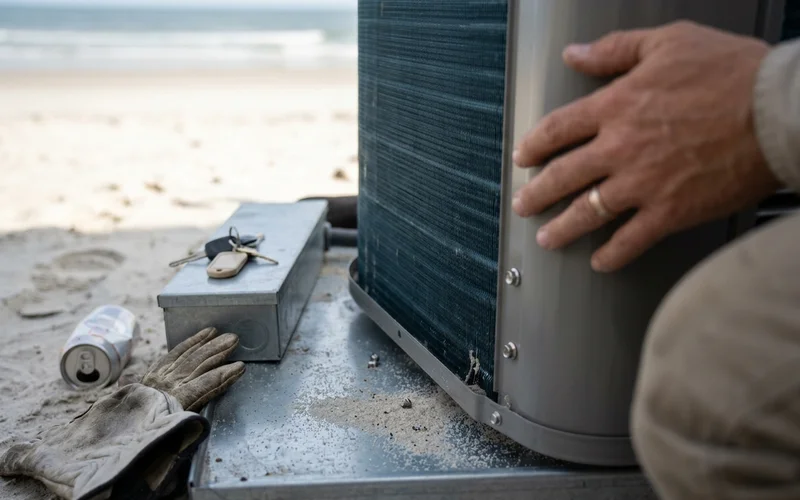
We strongly suggest placing your condenser on a raised, wind-shielded platform. Elevation keeps the equipment out of standing flood water and away from pooling yard runoff. On raised beach homes, condensers usually sit on a sturdy wooden or composite stand.
Our installers always look for a few critical details when setting a new system. You want a setup that maximizes airflow while minimizing direct exposure. The ideal installation includes:
- A stand made of corrosion-resistant material, securely anchored for hurricane winds.
- Sufficient height above expected coastal flood levels.
- Clearance on all four sides for proper ventilation and service access.
- Refrigerant line sets with intact foam insulation and UV protection.
We see extreme wear on condo towers where rooftop and balcony condensers are fully exposed to driving salt spray. Building rules often dictate exactly where these units must go. That lack of flexibility makes factory coil coatings absolutely essential for high-rise beachfront properties.
Caring for a Coastal Unit
We remind every customer that a coastal rating does not mean the system is maintenance-free. You must actively wash the salt off the cabinet to get the full lifespan out of the unit. A gentle freshwater rinse from a standard garden hose every few weeks does wonders to stop surface rust.
Our maintenance plans include a thorough, professional chemical coil cleaning once a year. You must avoid common mistakes that homeowners make when attempting to clean their own equipment. These harmful practices include:
- Using a high-pressure washer on the condenser.
- Bending the delicate aluminum fins with stiff brushes.
- Stripping away the protective factory coatings with harsh household chemicals.
We have documented the best cleaning methods in our complete guide on salt air and your AC. Taking five minutes a month to rinse the cabinet will easily add years of life to your system. Consistent care is the only way to beat the harsh Alabama climate.
Warranty Fine Print
We advise reading the exact warranty terms, as many brands completely exclude corrosion damage near the coast. Some manufacturers will void standard warranties if the unit is installed within one mile of saltwater. They only provide full coverage if you purchase their specific coastal-rated equipment, like the Trane Seacoast or Carrier Coastal models.
Our team will always provide a printed copy of the manufacturer guarantee before you sign anything. You need to ask your contractor to point out the specific language covering salt exposure. You also need to verify if the coil coating itself carries a separate warranty from the third-party applicator.
Getting a Quote
We suggest getting at least two detailed quotes to compare exactly what coastal upgrades are being offered. You need to know if you are paying for a premium factory dip or just a quick field spray. When you compare replacement options, ask each contractor these specific questions:
- The exact type of factory coil coating being used, such as Heresite or ElectroFin.
- The specific cabinet and stainless hardware upgrades included in the price.
- The exact placement of the new unit and the material of the stand.
- The fine print regarding salt corrosion warranties in our specific zip code.
Our dispatchers are ready to send a licensed, insured professional to your home today. Call (251) 270-2500 to get free replacement quotes on a coastal rated ac condenser from local experts who work near the water every single day. There is no referral fee, and you will get clear answers about the best ac for beach house conditions.