
The One Rule: Do Not Turn the AC Off
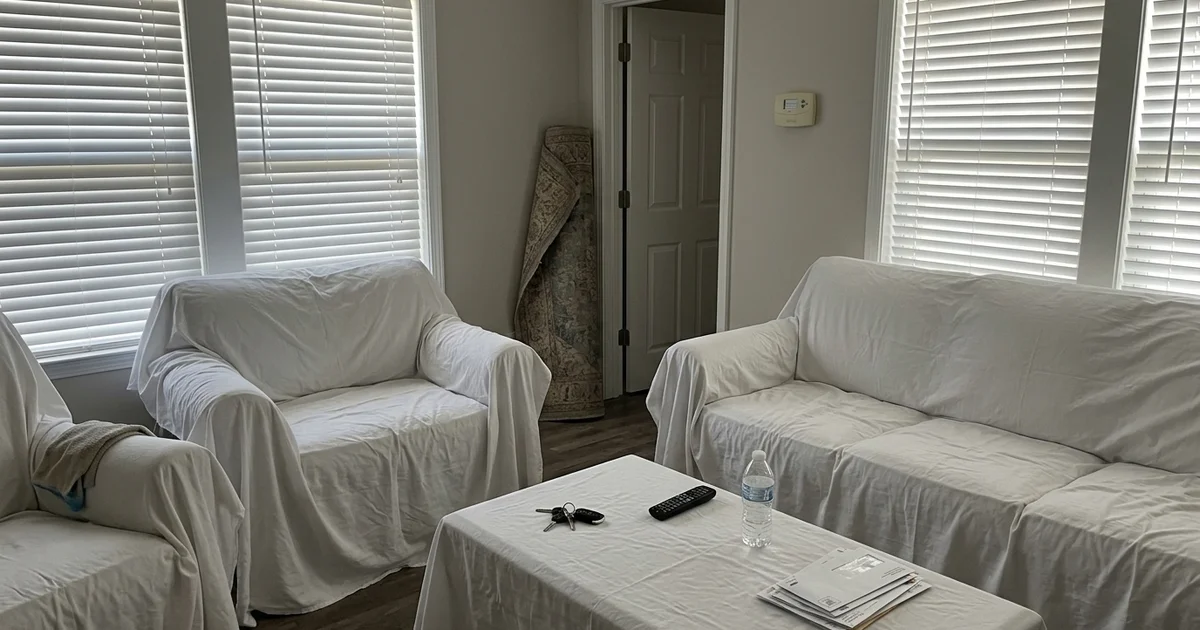
If you own a second home or a vacation rental in Gulf Shores, Orange Beach or anywhere near the water, the most important thing to know is this: an empty beach house in summer needs the AC running. Not for comfort, but to keep the air dry. Turn it off, and in the heat and humidity of July and August, indoor humidity can climb high enough for mold within days. This guide covers the settings and habits that protect a closed-up home, along with humidity control options when settings alone are not enough.
Why Empty Homes Get Damp So Fast
Gulf air is loaded with moisture. When a house is occupied and cooled, the AC pulls that moisture out as it runs. When the house is empty and the AC is off or barely running, moisture from outside seeps in through every gap, and nothing takes it back out. Drywall, carpet, upholstery, mattresses and cabinets soak it up. Mold needs moisture more than anything else, and a closed, dark, humid house is ideal for it.
Recommended Settings
These are starting points. Adjust based on what your humidity readings show.
| Setting | Summer (roughly April to October) | Winter |
|---|---|---|
| Thermostat mode | COOL | HEAT |
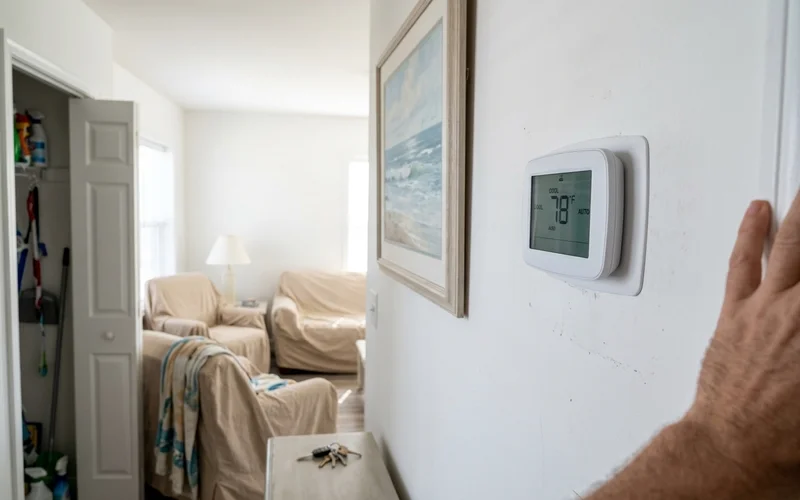
| Temperature | High 70s F | Mid 50s F or as needed to prevent freezing |
| Fan | AUTO | AUTO |
| Humidity target | Under 60 percent, ideally near 50 to 55 | Watch during warm spells |
| Dehumidifier (if installed) | Set to about 50 percent | Set to about 50 percent |
Why not higher than the high 70s? At very high setpoints, the AC may barely run, which means it barely dehumidifies. If humidity climbs above 60 percent, lower the setpoint a couple of degrees or add dehumidification.
Why fan on AUTO? With the fan on ON, moisture on the indoor coil blows back into the house between cycles.
Dehumidifier Use
If your readings show humidity creeping up even with the AC set correctly, add dehumidification:
- A whole-home dehumidifier tied into the ductwork is the best long-term answer for a home that sits empty. It runs to a humidity target, drains automatically, and works even when the AC is not cooling. See whole-home dehumidifiers.
- A portable dehumidifier can help in a small condo, but only if it drains continuously into a floor drain or sink with a hose. A bucket fills up in a day and then it stops.
Some thermostats have a built-in dehumidify setting that runs the AC a bit longer or at a lower fan speed to remove more moisture. Ask your contractor if yours can.
Remote Monitoring
If you live out of state, you do not want to learn about a problem from a musty smell weeks later. Useful tools:
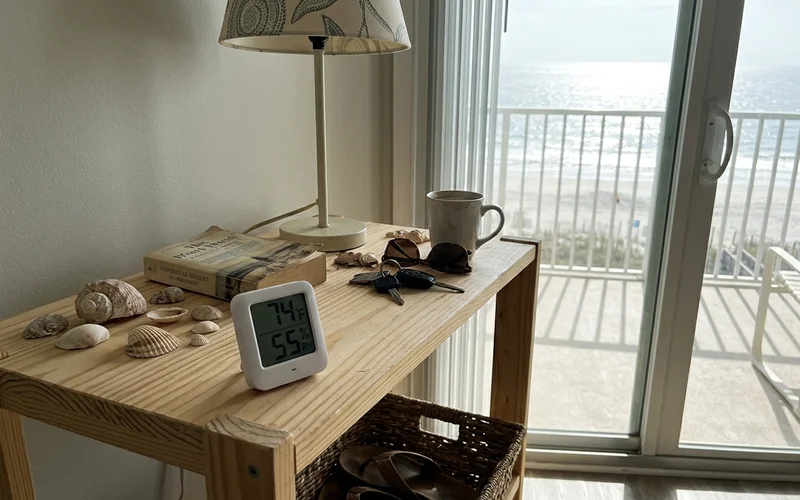
- Wi-Fi temperature and humidity sensors that send alerts to your phone if humidity goes above your limit or temperature swings
- Smart thermostats that show indoor conditions and let you adjust settings remotely
- Water leak sensors near the air handler and water heater
- Power outage alerts from some sensors or your utility
Set alerts for humidity above 60 percent and temperatures above about 85 degrees. Either one means the AC may have stopped.
A Check-In Schedule
Even with sensors, someone should visit. Every week or two in summer is a good rhythm. On each visit:
- Check that the AC is running and air from the vents is cool
- Look at the thermostat and humidity reading
- Check the air handler closet and drain pan for water
- Sniff closets and bathrooms for musty smells
- Look for new stains on ceilings under the air handler
- Flush toilets and run faucets to keep traps full and prevent sewer smells
Before You Leave for the Season
- Change the filter and date it
- Have the drain line flushed so it does not clog while you are gone
- Test the heat if winter guests are coming
- Leave closet doors and interior doors open so air circulates
- Update access instructions with your manager or neighbor
- Write down your contractor’s number: (251) 270-2500
For more on caring for rental and second-home HVAC, see beach home and condo HVAC.
If Something Goes Wrong
If your sensor alerts you that humidity or temperature is climbing, call (251) 270-2500. We connect you with a licensed, insured contractor who can coordinate access with your manager, diagnose the problem and send photos and a written estimate so you can approve the repair remotely. There is no referral fee.