
When the AC Is Not Enough
Your AC removes moisture while it cools. For many homes, that is enough. But on the Gulf Coast, some houses stay humid even when the AC is working fine. That is where a whole-home dehumidifier comes in. This guide helps you decide whether one is justified for your home, and what whole-home dehumidifier installation involves.
Signs You Might Need One
- Indoor humidity stays above 60 percent even with a correctly working AC and the fan on AUTO
- The house feels cool but clammy, especially in spring and fall when the AC runs less
- Musty smells in closets, bathrooms or when you open the house
- Condensation on windows or cold water pipes
- Mildew spots on walls, grout, furniture or clothing
- You run a portable dehumidifier constantly and empty it every day
- The home sits empty for weeks at a time
- It is a raised home or river home with damp crawlspaces
Before buying equipment, rule out simpler causes. See why a house is humid with the AC on.
How a Whole-Home Dehumidifier Works
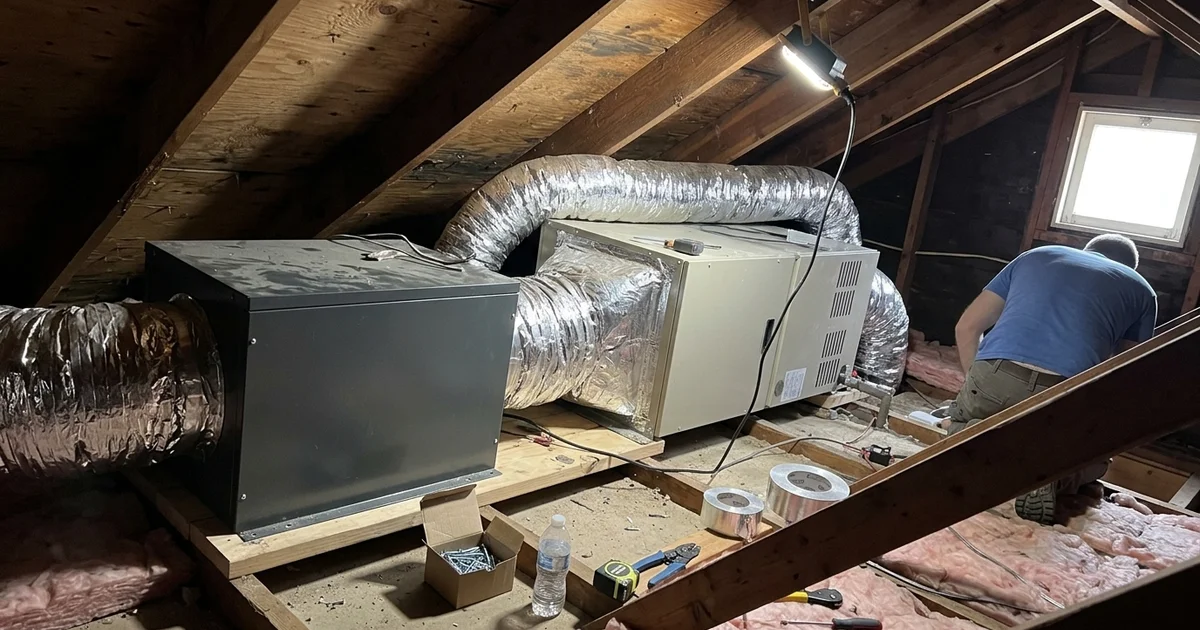
A whole-home (or ducted) dehumidifier is a standalone unit installed near the air handler, in an attic, closet, crawlspace or garage. It connects to your ductwork, pulls in humid air, removes moisture, and sends dry air back into the system to be spread through the house.
- It runs to a humidity target you set, usually around 50 percent
- It works whether or not the AC is cooling, which matters on mild days and in empty homes
- It drains automatically into a condensate line
- It runs quietly out of sight
Whole-Home vs Portable
| Whole-home | Portable | |
|---|---|---|
| Coverage | Entire house | One room or small area |
| Drainage | Automatic | Bucket, or hose to a drain |
| Noise | Out of sight, quiet | In the room, noticeable |
| Capacity | High | Low to moderate |
| Upfront cost | Higher | Low |
| Good for empty homes | Yes | Only with a continuous drain |
| Maintenance | Filter change, yearly check | Emptying, cleaning |
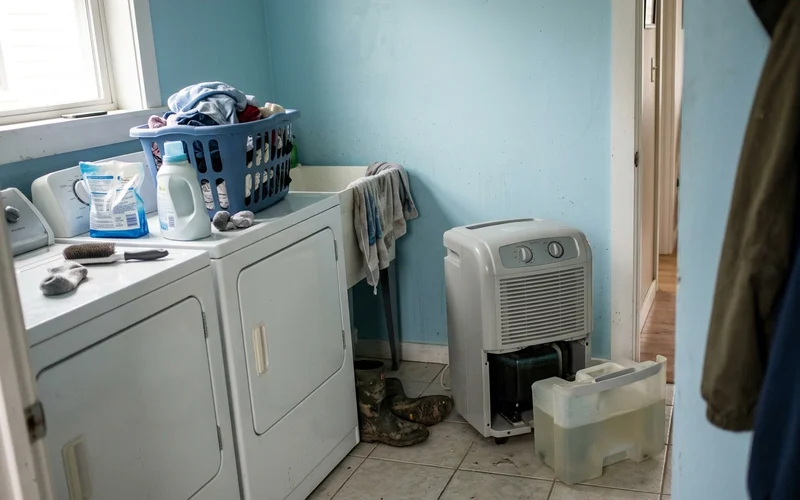
Portable units are fine for a damp laundry room or a small space. For whole-house humidity problems on the coast, especially in homes that sit empty, a whole-home unit is usually the better answer.
Homes That Benefit Most
Vacant and second homes
A beach house that sits empty for weeks needs humidity control without running the AC hard. A whole-home dehumidifier keeps the air dry at a higher thermostat setting. See keeping a vacant beach home cool and dry.
Raised beach homes and river homes
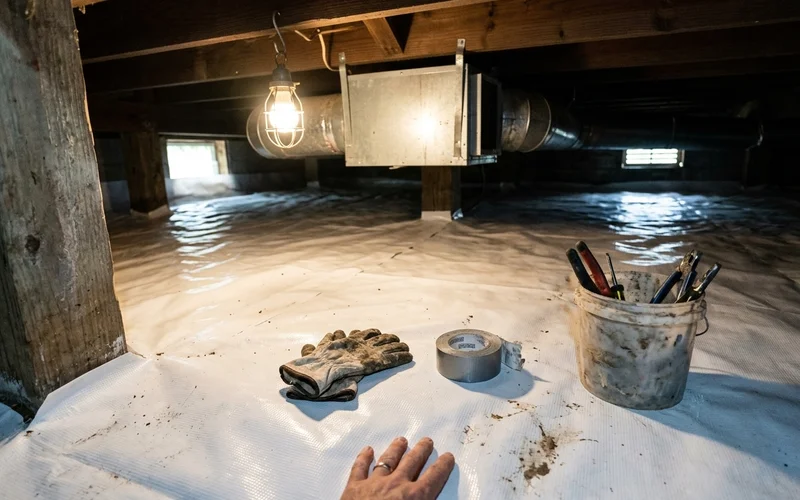
Homes on pilings and homes near the Magnolia River or bays often have damp crawlspaces, ducts under the house and lots of outside air exposure. Moisture finds its way in.
Homes with oversized AC systems
If your AC is too big and short cycles, a dehumidifier can fix the humidity problem without replacing a system that still has life left.
Tight, efficient homes
Newer, well-sealed homes sometimes need controlled dehumidification because less air exchange means moisture from cooking, showers and people builds up.
Cost in General Terms
Your contractor quotes it for free. As a general Alabama range, installed whole-home dehumidifiers often fall somewhere around $1,800 to $4,000, depending on capacity, location and how much ductwork is needed. Foley AC Repair does not set prices.
Questions to Ask Your Contractor
- What humidity levels did you measure, and where?
- Is my AC properly sized, or is that part of the problem?
- Where will the dehumidifier go, and how will it drain?
- What capacity do I need for my home’s size?
- Can I monitor humidity remotely?
Get an Estimate
Call (251) 270-2500. We connect you with a licensed, insured contractor who deals with coastal humidity in South Baldwin every day. You get a free estimate before any work, and there is no referral fee.