
Cool but Clammy
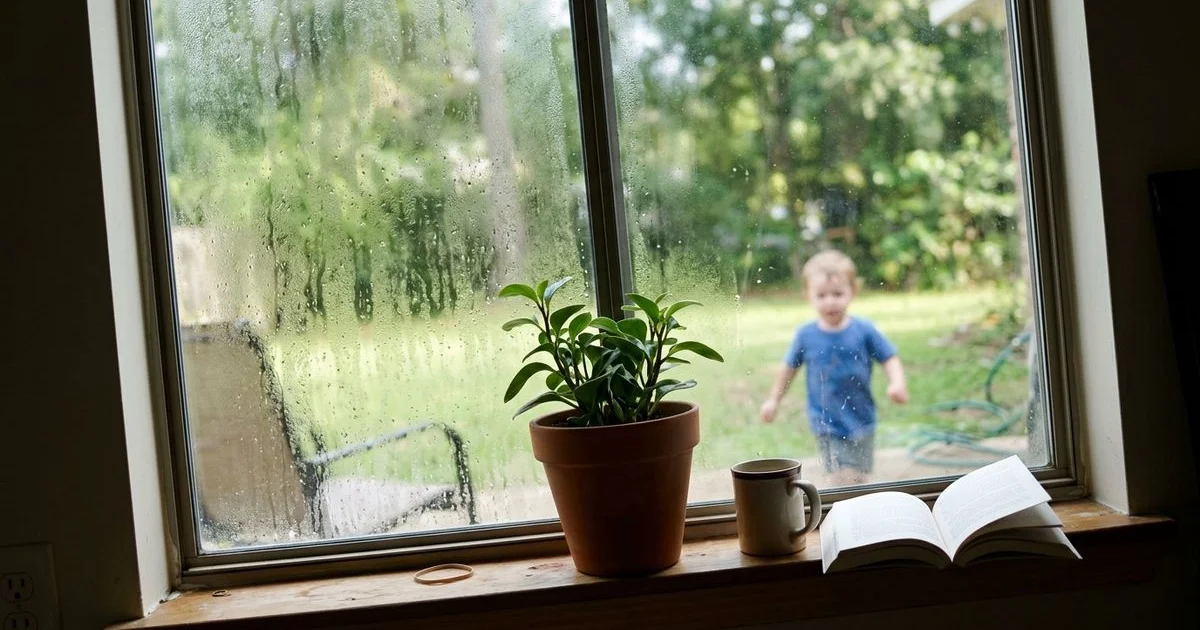
We know exactly how frustrating it is when your thermostat reads 74 degrees, but the house still feels like a swamp.
Finding your house humid with ac on is a massive complaint down here on the Gulf Coast. Our field data from 2026 shows that standard systems struggle against our 75 percent average summer humidity, causing issues like:
- Foggy windows in the morning.
- Musty smells in your closets.
- Damp sheets at night.
Your AC is actually supposed to cool the air and dry it simultaneously. We see the house stay sticky when the moisture removal part falls short. Troubleshooting the common causes can often fix an ac not removing humidity.
Our crew suggests checking a few simple things before you assume the system is broken. If you rule those out, it might be time to discuss professional humidity control in Foley.
What Indoor Humidity Should Be
We recommend keeping your indoor moisture levels tightly controlled.
The ideal indoor humidity range established by the EPA and ASHRAE in 2026 sits between 30 and 50 percent.
Our technicians suggest aiming for under 55 percent to stay comfortable here on the coast.
Any reading above 60 percent for long stretches creates a breeding ground for problems.
We find that mold can germinate within 24 to 48 hours at those higher levels.
High moisture levels cause several immediate issues:
- Dust mites thrive in humid environments.
- Wood doors and floors swell until they stick.
- Closets begin to develop a musty odor.
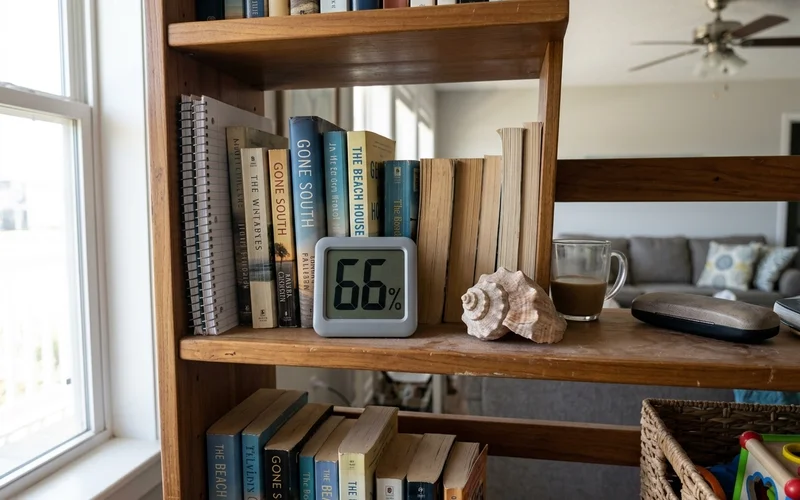
Our favorite starting point is buying a cheap digital hygrometer from a hardware store.
These simple meters tell you exactly what your air is doing.
The Common Causes of a House Humid With AC On
We see several main reasons why a home stays damp while the system runs.
High humidity in house ac running scenarios usually boil down to a few mechanical or behavioral issues.
An oversized AC
Our most frequent discovery in coastal homes is a cooling system that is simply too large.
A system that is too big cools the house fast and shuts off before the coil has been cold long enough to pull out much moisture.
We call this frequent stopping and starting short cycling.
The house hits the setpoint quickly, but humidity stays very high.
Our experts know a properly sized 3-ton unit needs steady runtime to remove its typical 5 to 20 gallons of water a day.
Without that runtime, the dampness lingers.
Fan set to ON instead of AUTO
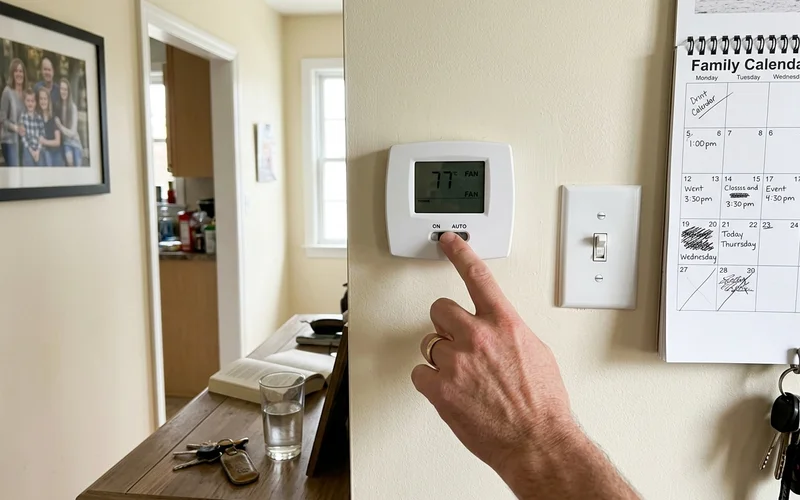
We fix a surprising number of humidity complaints just by pushing a button.
When the thermostat fan is set to ON, the blower runs all the time, even when the AC is not actively cooling.
Our testing shows that water sitting on the cold coil gets blown right back into the house as vapor.
Switching that setting to AUTO is completely free and often makes a noticeable difference within a day or two.
Duct leaks
Our crews frequently find return ducts leaking in hot attics or under raised homes.
These gaps pull in hot, wet outside air, overwhelming the cooling equipment.
We also see supply leaks depressurize the house.
That pressure difference pulls damp air in through tiny cracks around windows and doors.
Low airflow or a dirty coil
We often trace poor moisture removal back to a severely clogged filter.
A blocked filter or dirty coil can cause the system to freeze, which completely stops it from dehumidifying properly.
Our technicians always recommend checking out what causes a frozen AC coil to prevent this.
Regular filter changes are a cheap way to keep the air flowing.
Low refrigerant
Our refrigerant checks sometimes reveal a leak in the system.
A system low on refrigerant cannot cool the coil properly, meaning it removes far less moisture from your rooms.
Settings on an empty house
We frequently deal with second homes where the thermostat is set too high or turned completely off.
A vacant home lets moisture levels climb rapidly, inviting mold growth.
Our team has put together specific advice for these properties.
You can read the details in our guide on vacant beach home humidity settings.
Lots of moisture sources
We always ask homeowners about their daily routines when diagnosing humidity.
Showers without exhaust fans, cooking, drying clothes indoors, or a damp crawlspace all add significant moisture.
Our clients who run vacation rentals often see spikes when a large group of guests arrives.
Every person breathing and cooking adds water vapor to the indoor environment.
Fixes, From Free to Bigger Projects
We break down the possible solutions by cost and expected impact.
The following table gives you a clear comparison of what each repair will address.
| Fix | Cost level | Helps with |
|---|---|---|
| Set thermostat fan to AUTO | Free | Moisture blowing back off the coil |
| Change the filter | Low | Airflow and frozen coils |
| Run bath and kitchen exhaust fans | Low | Moisture at the source |
| Lower the setpoint a degree or two | Low | Longer run times, more drying |
| Seal and insulate ducts | Moderate | Damp air leaking in |
| Adjust blower speed | Low to moderate | More moisture removal per cycle |
| Crawlspace vapor barrier | Moderate | Damp air from under raised homes |
| Whole-home dehumidifier | Moderate to higher | Humidity when AC alone is not enough |
| Right-sized variable-speed system | Higher | Oversizing at replacement time |
Our local contractors can measure humidity, airflow, and the system’s performance to find the actual cause.
A professional diagnosis helps you quote the right fix without guessing.
When a Dehumidifier Makes Sense
We highly recommend pricing a dedicated moisture solution if your levels stay above 60 percent.
A properly working, reasonably sized AC cannot always win the battle against Gulf Coast weather.
Our latest 2026 installation data shows that a whole-home dehumidifier costs between $1,500 and $3,500 installed.
It ties directly into the ductwork, dries the whole house to a set target, and drains automatically.
We find these units especially useful in raised beach homes, river homes, and second properties that sit empty.
You can learn more by reading about whole-home dehumidifiers on the Gulf Coast.
Get It Checked
We encourage you to call (251) 270-2500 if you need help.
The direct line connects you with a licensed, insured contractor who deals with coastal moisture problems every single day.
Our service ensures you get a free estimate before any work begins, and there is never a referral fee.
Getting a professional opinion is the fastest way to fix a house humid with ac on.