
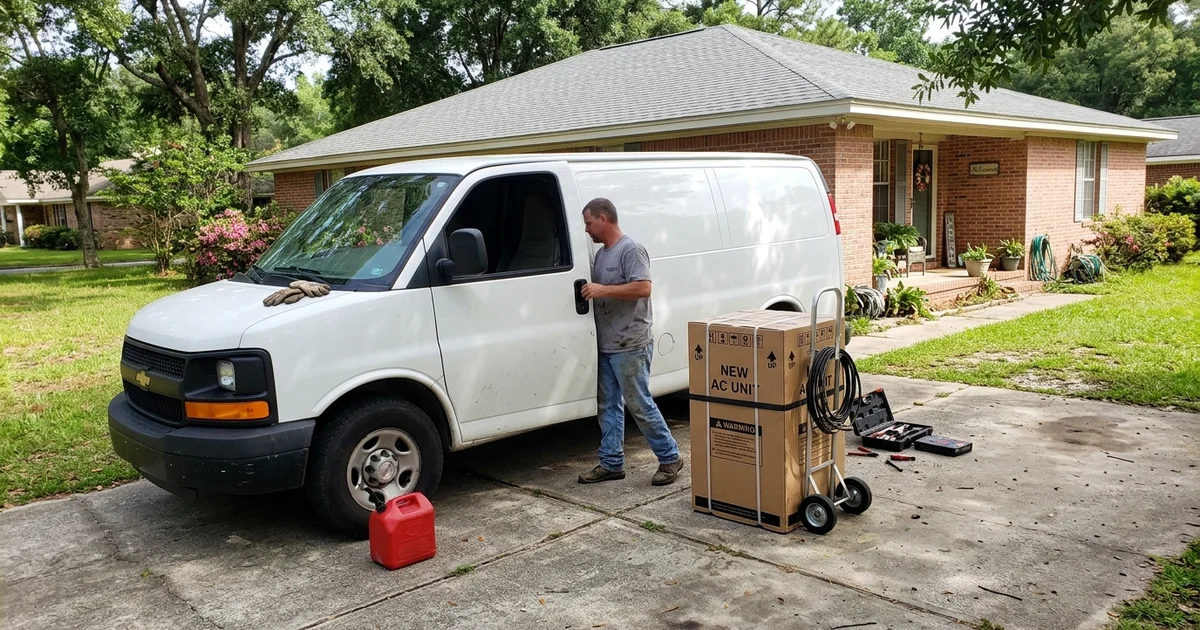
Knowing What to Expect Makes It Easier
You have chosen a contractor and booked your install. Replacing an AC is a big job, but a well-run install day is fairly predictable. Here is what usually happens, how long it takes, and how to get your home ready. If you are still comparing quotes, see AC replacement first.
A Typical Timeline
Every job is different, but a standard like-for-like replacement often goes like this:
Morning: arrival and setup. The crew arrives, confirms the plan with you, lays down floor protection and shuts off power to the system.
Removing the old system. Refrigerant is recovered from the old system using proper equipment. It is never vented into the air. The old outdoor unit is disconnected and removed, and the indoor coil or air handler is taken out.
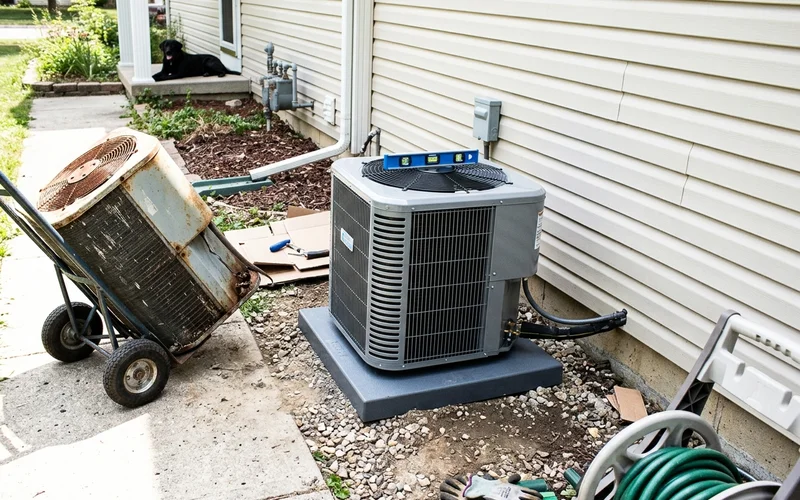
Setting the new equipment. The new outdoor unit goes on a fresh pad or stand. The new indoor coil or air handler is installed, and the drain line and safety switch are connected.
Line set and electrical. Refrigerant lines are connected, or replaced if needed, and brazed. Electrical connections, disconnect and thermostat wiring are made.
Afternoon: evacuation, charging and startup. The system is pressure tested for leaks and evacuated with a vacuum pump. It is then charged, started and tested.
Wrap-up. The crew cleans up, hauls away old equipment, walks you through the thermostat and answers questions.
A like-for-like swap is usually done in a day. Add time for new ductwork, a new platform on a raised home, electrical upgrades or a condo rooftop unit.
Pads and Stands for Raised Homes
On raised beach homes, the outdoor unit usually sits on an elevated platform or stand. If the old one is rusted, rotted or not properly anchored for storm winds, it should be replaced or reinforced. Units on the ground get a new level pad. Near the water, ask about corrosion-resistant stands and hardware.
Refrigerant Lines
The line set is the pair of copper pipes connecting the outdoor and indoor units. Newer refrigerants may allow reuse of an existing line set if it is the right size and in good condition, but it must be flushed and tested. Damaged, undersized or badly corroded lines should be replaced. Line insulation should be intact, especially under raised homes.
Startup Testing
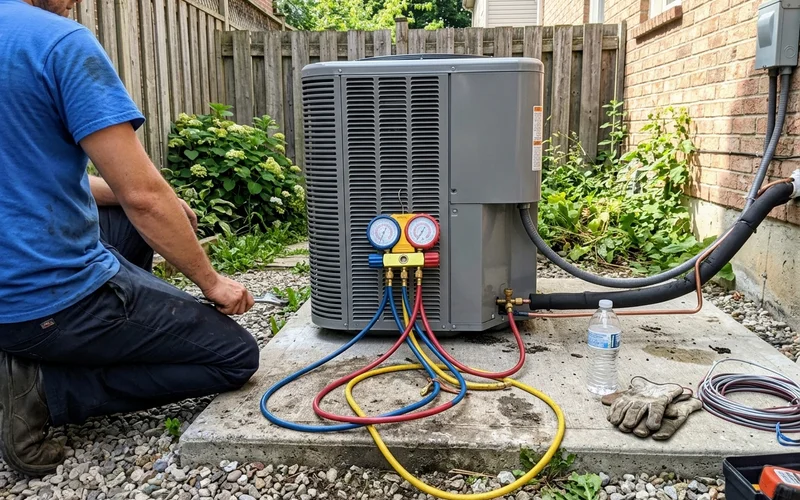
Good startup testing is what separates a proper install from a rushed one. Expect the contractor to:
- Pull a deep vacuum and confirm it holds before charging
- Charge the system and check superheat or subcooling against the manufacturer’s specs
- Measure airflow and temperature difference across the indoor coil
- Check electrical readings on the compressor and fan motors
- Confirm the condensate drain flows and the float switch works
- Test heating mode and heat strips on a heat pump
Ask for a copy of the startup readings. It is a useful record for future service.
Permits and Inspection
HVAC replacement requires a permit in Alabama. The licensed contractor pulls it and schedules any required inspection. The inspector may visit on install day or later. If an inspection is scheduled separately, you or your manager may need to provide access.
How to Prepare Your Home
| Before install day | Why |
|---|---|
| Clear a path to the indoor unit and the outdoor unit | Faster, safer work |
| Move valuables and fragile items near the work areas | Avoid accidents |
| Secure pets in a separate room | Doors will be open |
| Unlock gates, garage and attic access | Saves time |
| Note your Wi-Fi password for a smart thermostat | Setup at the end |
| Plan to be home at start and finish | Confirm details and see it running |
Rental owners: block the dates in your booking calendar. Condo owners: confirm with the building manager about elevator use, rooftop access and work hours.
Common Install-Day Surprises
Most installs go to plan, but a few things come up often enough that it helps to know about them ahead of time.
- Hidden duct problems. Once the old air handler is out, the contractor may find crushed, disconnected or badly leaking ducts. They should show you and quote any fix before doing it.
- A rotted or rusted stand. On raised beach homes, a stand that looked fine can turn out to be weak once the old unit is off. It should be replaced before the new equipment goes on.
- Electrical updates. An old disconnect or undersized wiring may need replacing to meet code for the new system.
- Line set issues. A line set that looked reusable may fail a pressure test and need replacing.
- Drain routing. A new air handler may need the condensate drain rerouted or a new secondary pan added.
A good contractor explains any change, gives you a price and waits for your approval. Ask them to photograph anything unexpected so you have a record.
After the Install
- Register the equipment for the manufacturer warranty if the contractor does not do it for you
- Keep the paperwork, model numbers and startup readings together
- Change the filter on schedule and book the first tune-up next spring
- Call the contractor if anything seems off in the first few weeks
For tips on picking the right company in the first place, see choosing a contractor. To get free replacement quotes, call (251) 270-2500. There is no referral fee.