Labor Day has come and gone, the last big weekends of the 2026 season are behind us, and a lot of Gulf Shores and Orange Beach owners are getting ready to close up for the winter or switch to long-stay snowbird guests. Before you lock the door and drive home, spend an hour on the HVAC. The choices you make in late September and October decide whether you come back in spring to a fresh-smelling house or a musty one with a dead AC.
This is a short checklist for the end of the 2026 rental season, written for South Baldwin condos and beach houses.
Why Late September and October Are the Time to Act
It still feels like summer here well into October. Afternoon highs stay warm, the air stays wet, and your AC is still doing real work drying the house. At the same time, the first cold fronts usually show up in November, and that is when heat pumps and heat strips get their first test in months.
That makes this window a natural checkpoint. The system has just come through its hardest stretch of the year, so small problems like a slow drain or a weak capacitor are easy to spot now. And contractors are much easier to book than they were in July. If something needs fixing, it can be done before you leave instead of after a neighbor calls about water in the ceiling.
Off-Season Thermostat and Humidity Settings
The single most important rule for an empty beach property: do not turn the AC off. An empty house with no cooling can get damp enough for mold within days while the weather is still warm. The AC is your dehumidifier.
Instead:
- Raise the setpoint to somewhere in the high 70s rather than switching the system off.
- Set the fan to AUTO, not ON. With the fan on ON, water on the indoor coil blows back into the house between cycles.
- Watch humidity, not just temperature. Aim to keep it under 60 percent. A cheap Wi-Fi humidity sensor lets you check from home.
- Use a dehumidifier setting if your thermostat has one, or talk to a contractor about a whole-home dehumidifier if the house always runs damp.
Our full guide to keeping a vacant beach home cool and dry goes deeper on settings and a check-in routine.
Final Drain Line Flush and Filter Change
After a summer of heavy use, two things are almost always due.
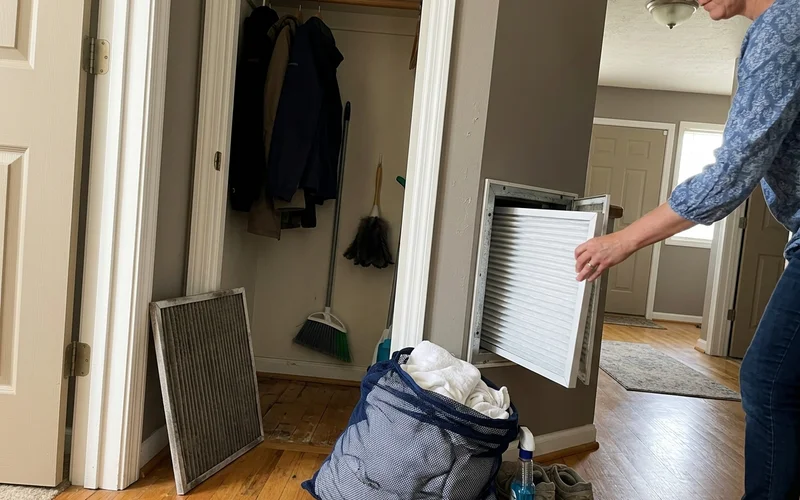
The filter. Rental guests run the AC hard and nobody changes the filter mid-week. A clogged filter restricts airflow, which can freeze the coil and leave the system struggling all winter. Put a fresh one in before you leave and write the date on it.
The condensate drain. Gulf humidity means your AC made a lot of water this summer, and algae grows in that drain line. If it clogs while the house is empty, water backs up into the pan, trips the float switch and shuts the system off. Then the house sits with no cooling and no one knows. A contractor can flush the line and check the pan, or you can pour a cup of white vinegar into the cleanout if your system has one.
Condo owners: think about the unit below
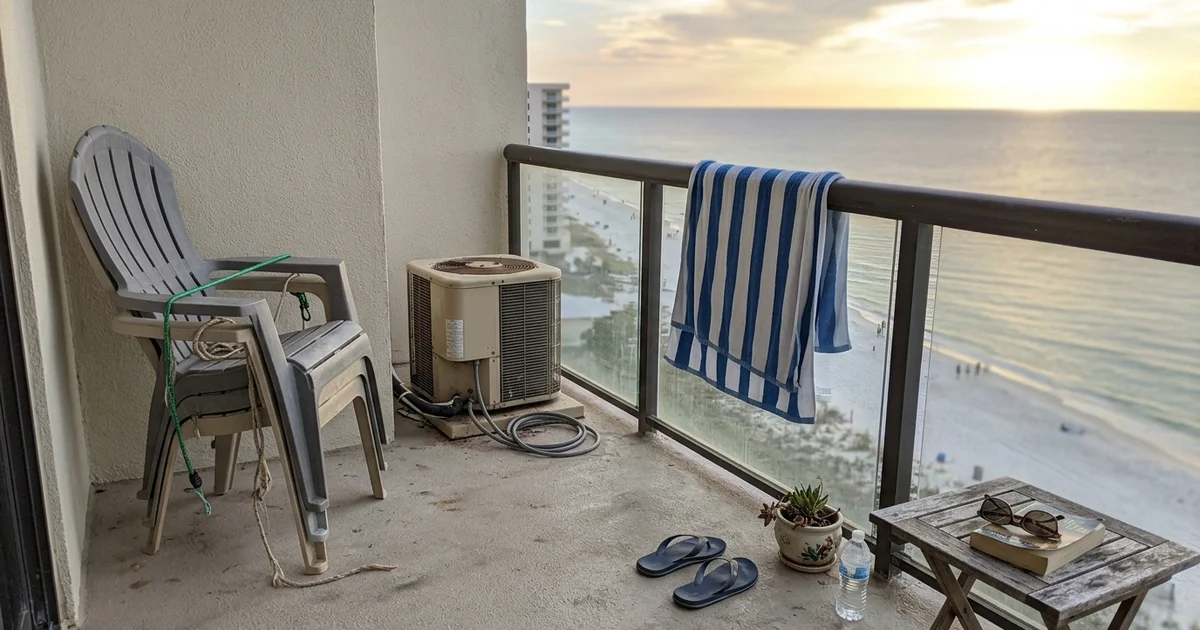
In Orange Beach and Gulf Shores towers, a clogged drain can leak into the ceiling of the condo downstairs. Most HOAs hold owners responsible for their own drain lines, so a pre-closing flush is cheap insurance.
Fall Heating Test Before Snowbird Renters Arrive
If you rent to long-stay winter guests, their first cold morning is the wrong time to find out the heat does not work. Test it now:
- Switch the thermostat to HEAT and set it a few degrees above room temperature.
- Within a few minutes you should feel warm air. A burning-dust smell on first use is normal and should fade quickly.
- Watch for the thermostat showing AUX or EM heat constantly. If it does in mild weather, the heat pump may not be pulling its weight.
- Switch back to COOL when you are done.
A contractor can test the heat strips, the reversing valve and the defrost controls properly. See our pre-winter heating check for what a fall visit covers.
Hurricane Season Is Not Over Until November 30
It is easy to relax once the crowds leave, but the 2026 Atlantic hurricane season officially runs through November 30. Before you go:
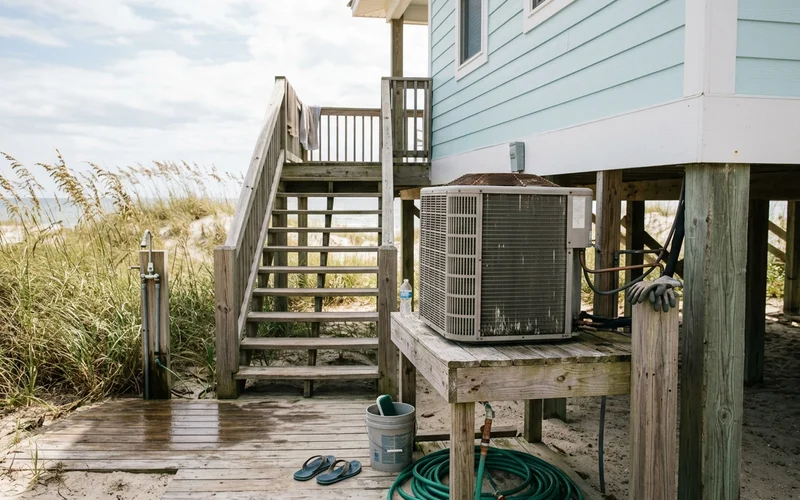
- Clear loose items like chairs, grills and hoses from around the outdoor unit.
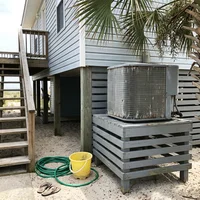
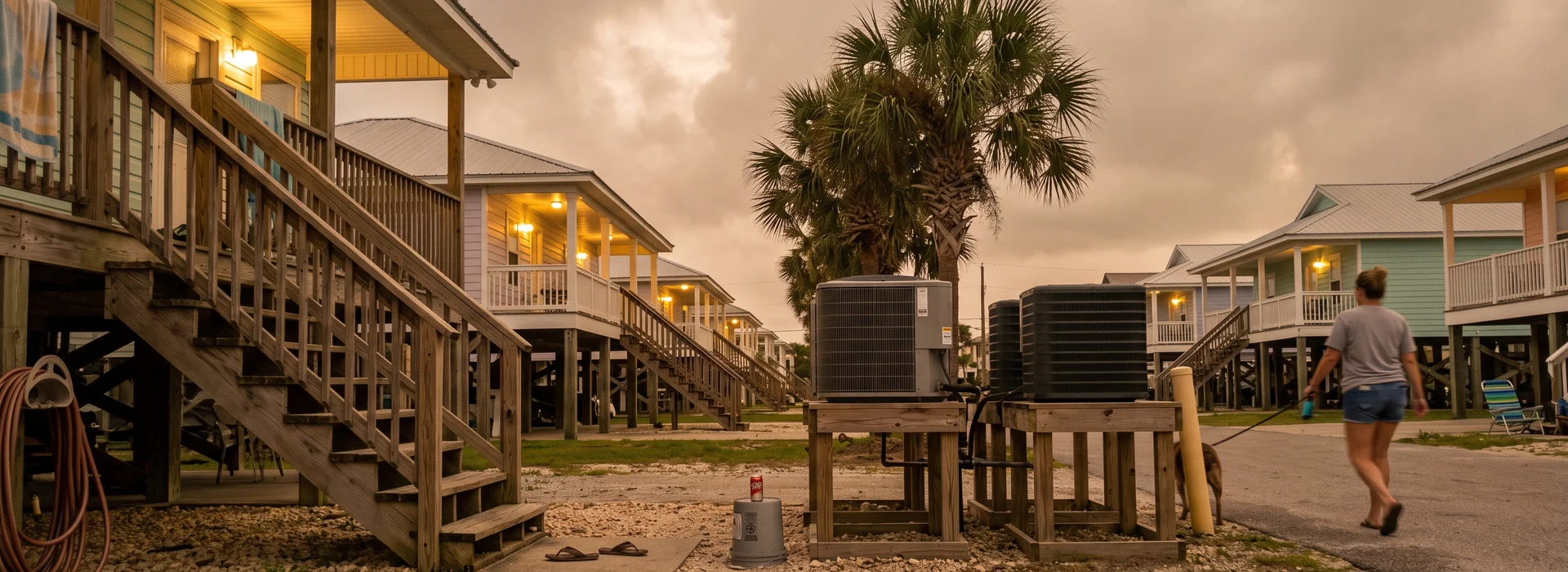
- Check that the condenser stand or platform is solid, especially on raised homes.
- Make sure your property manager knows where the breaker and outdoor disconnect are.
- Leave instructions: if the unit sits in floodwater or takes debris damage, do not restart it until a contractor has inspected it.
Our guide to AC after a hurricane or power outage explains what to check before restarting.
Quick Pre-Closing Checklist
| Task | Why it matters |
|---|---|
| Raise setpoint to high 70s, fan on AUTO | Keeps the house dry while empty |
| Fresh filter, dated | Protects airflow all winter |
| Drain line flushed | Prevents float switch shutoffs and leaks |
| Heat tested on HEAT mode | Ready for the first cold front |
| Outdoor unit area cleared | Less storm damage risk |
| Access notes updated with manager | Faster help if something fails |
Book a Pre-Closing Check
If you would rather have a pro handle it, call (251) 270-2500. Foley AC Repair connects you with a licensed, insured contractor already working in Gulf Shores and Orange Beach. They can flush the drain, change the filter, test the heat and send you photos and a written estimate if anything needs fixing. The estimate is free, and there is no referral fee.
Closing up a beach property this fall? See beach home and condo HVAC