
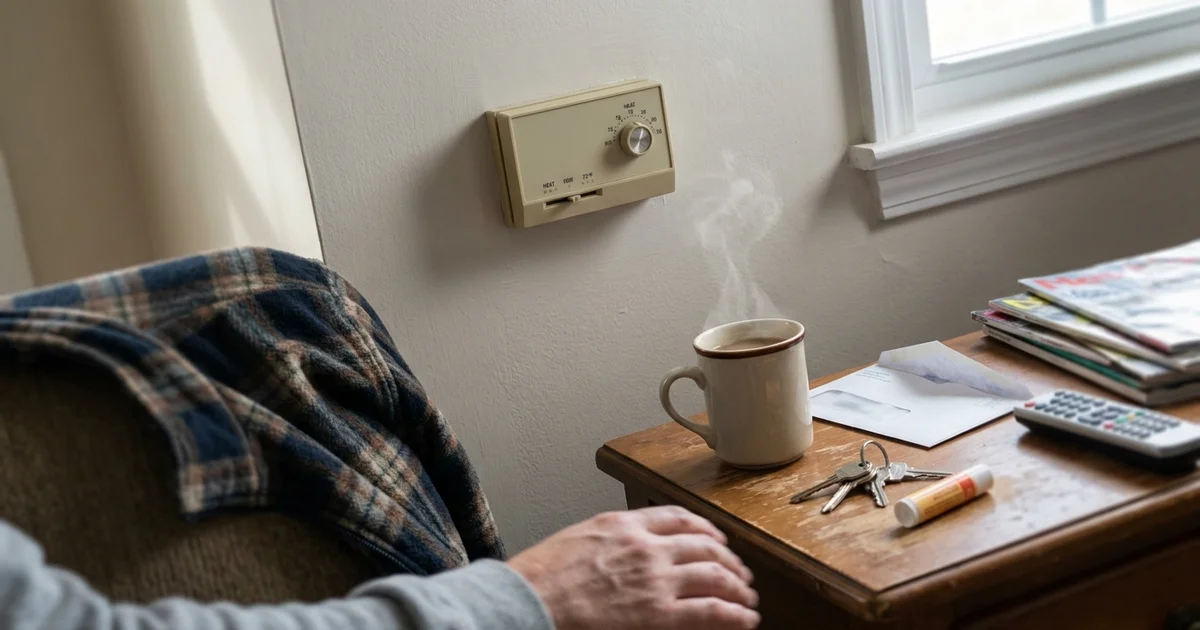
We know how easy it is to forget about a heating system check before winter when living down by the coast. The transition from intense summer heat to mild fall weather often lulls homeowners into a false sense of security.
Our technicians at Foley AC Repair see this pattern repeat every single year. The average winter low in Foley eventually drops down to 38 degrees Fahrenheit.
We receive a massive spike in emergency calls when those systems fail to perform.
A fall check through heating maintenance in Foley keeps you out of that frantic rush. Our guide below explains exactly what gets checked and how you can perform a quick test yourself.
Why Coastal Owners Skip It, and Why They Should Not
Many homeowners assume their heating equipment barely runs during a mild South Baldwin winter. Our repair logs show that skipped inspections lead directly to emergency service calls.
That mild weather hides underlying mechanical problems until the first freezing night hits. Our team knows this dual-role heat pump faces unique local challenges. Constant exposure to salty Gulf air can reduce an unprotected system’s lifespan to just seven to 12 years.
We use preventative fall heat pump maintenance to combat that rapid coastal deterioration. A thorough cleaning removes the corrosive salt buildup from your condenser coils.
Once a Year, in the Fall
Our scheduling data points to October or November as the ideal time for a tune-up. The heaviest cooling demands are finally behind us. We suggest getting this done before the first real cold snap arrives.
Historical weather data shows our area’s first freezing temperatures usually hit by late November or early December. Our standard recommendation is one annual check for most full-time residences.
Property managers with winter rentals must schedule service well before snowbirds arrive. We want to help you avoid uncomfortable late-night phone calls from freezing guests. This proactive approach saves time and money.
What Gets Checked
Our comprehensive inspection covers every critical part of your heating system. The following sections outline exactly what a professional contractor reviews.
Heat strips
We always include a thorough heat strip check when testing your air handler. Most residential heat pumps use a 10-kilowatt or 15-kilowatt heating element for auxiliary warmth. Our technicians verify that each individual heating element activates properly.
Failed sequencers or stuck relays are common reasons a house stays freezing on a January morning. We also confirm that the high-limit safety switches are functioning correctly. These safety mechanisms prevent the air handler from overheating and causing a fire hazard.
Reversing valve
Our next step involves testing the reversing valve. This vital part shifts the flow of hot refrigerant gas to change your unit from cooling to heating mode. We watch closely to ensure it shifts cleanly without any hesitation.
A sticky valve is a frequent mechanical failure in older coastal units. Our tests prevent situations where the system gets stuck blowing cool air in the middle of winter. Catching a sluggish valve early saves you from a miserable weekend.
Defrost operation
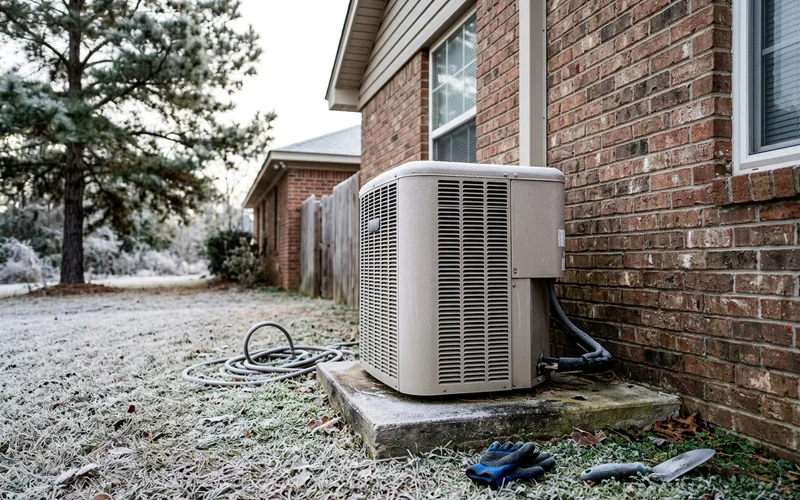
We pay special attention to the defrost controls during damp mornings. Frost naturally forms on the outdoor coil when temperatures hover near freezing. Our inspection ensures the defrost board melts this ice away efficiently.
Standard defrost cycles run every 30, 60, or 90 minutes depending on your specific equipment settings. We test the sensor to guarantee the coil does not turn into a solid block of ice. Read about the defrost cycle to know what is normal for your unit.
Electrical and safety
Our electrical audit catches small issues before they cause total system failure. Weak components strain the entire unit and drive up your utility bills. We inspect several key electrical areas during a standard visit:
- Testing capacitors is critical because a blown capacitor is a cheap fix that prevents a costly motor failure.
- Our crew tightens all loose wiring to prevent dangerous electrical arcing and corrosion.
- Confirming the thermostat calls for auxiliary heat at the right time ensures proper staging.
We carry replacement parts to fix these minor electrical faults on the spot. Proactive replacements keep your heater running reliably.
Airflow
We prioritize airflow checks because poor circulation kills HVAC efficiency. A suffocated blower motor has to work twice as hard to push conditioned air. Our airflow checklist includes two main tasks:
- Replacing dirty filters eliminates the number one cause of winter short-cycling.
- We check the blower wheel to ensure the motor runs properly at full speed.
Clean airflow prevents the heating system from overheating and shutting down.
Gas furnaces and dual-fuel systems
Our technicians take extra precautions for homes equipped with a gas furnace or a dual-fuel setup. These systems burn combustible fuel and require rigorous safety testing. We thoroughly evaluate the burners, ignition modules, and flame sensors.
A cracked heat exchanger is a severe hazard that can leak carbon monoxide into your living space. Our final step verifies that all venting systems safely exhaust combustion gases outside.
The Burning-Dust Smell
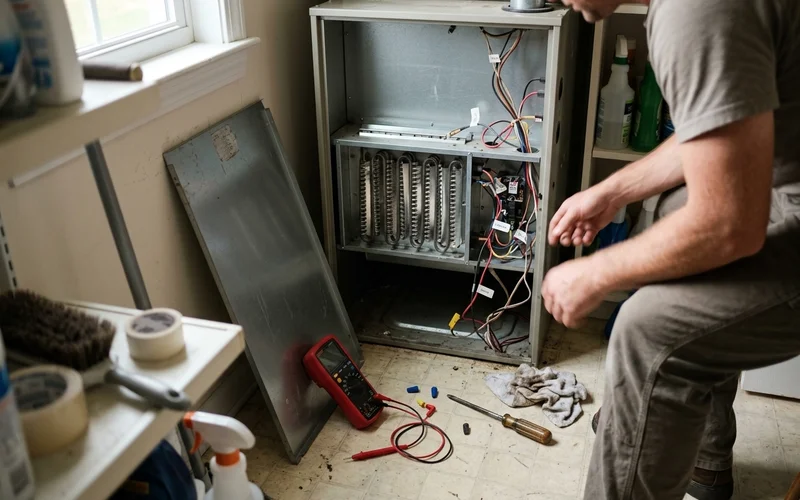
A distinct odor, often called the typical furnace smell first use creates, fills the house when the heat strips turn on. We assure you that this initial scent is completely normal. Dust settles heavily on the heating elements over the summer and simply burns off at high temperatures.
Our standard advice is to open a window for temporary ventilation. The scent should fade entirely within 30 to 60 minutes. We want you to call for emergency service if you experience any of these warning signs:
- The smell lingers for multiple hours without fading.
- Our dispatchers need to know immediately if the air smells like melting plastic or burning wiring.
- Visible smoke pours out of your indoor air vents.
- We treat a tripping circuit breaker during start-up as a serious electrical emergency.
Quick Owner Test
A simple DIY diagnostic process takes only a few minutes to complete on a mild fall day. We highly recommend testing your equipment yourself before freezing weather arrives. Finding a problem early is much better than waking up freezing in January.
Our suggested testing steps are easy to follow:
- Switch your thermostat to the HEAT setting and push the temperature up to 68 or 70 degrees.
- We recommend waiting just a few minutes for warm air to begin flowing from the indoor vents.
- Watch the thermostat screen closely to see if AUX or EM HEAT stays on constantly.
- Our technicians suggest walking outside to verify that the condenser unit sounds smooth and balanced.
- Switch the system back to COOL if the afternoon weather demands it.
We urge you to pay close attention to those auxiliary heat indicators. Constant auxiliary heat operation means the compressor is struggling to do its share of the work. Our comprehensive guide on a heat pump not heating explains these symptoms in greater detail.
Booking a professional check is the safest next step if your air stays cool.
Book a Heating System Check Before Winter
We make scheduling a heating system check before winter easy for residents throughout South Baldwin County. Securing your appointment now guarantees your comfort when the harsh weather finally arrives.
Our local dispatch team is ready to take your call at (251) 270-2500.
A licensed and insured contractor will provide a free estimate without any hidden referral fees. We look forward to keeping your home warm and safe all season long.