
Before You Flip the Switch
We know the drill after a Gulf Coast storm rolls through Baldwin County. The grid finally flickers back to life, the house is sweltering, and finding your ac not working after storm outages is incredibly frustrating.
That urge to immediately crank the thermostat is completely understandable. But flipping that switch too fast can actually destroy a perfectly repairable system. Our team sees this happen every season, and rushing to restart an ac after hurricane winds pass often ruins the compressor.
Let’s walk through the exact visual checks to make, and when you need to book an AC inspection to play it safe.
Step 1: Look Before You Touch
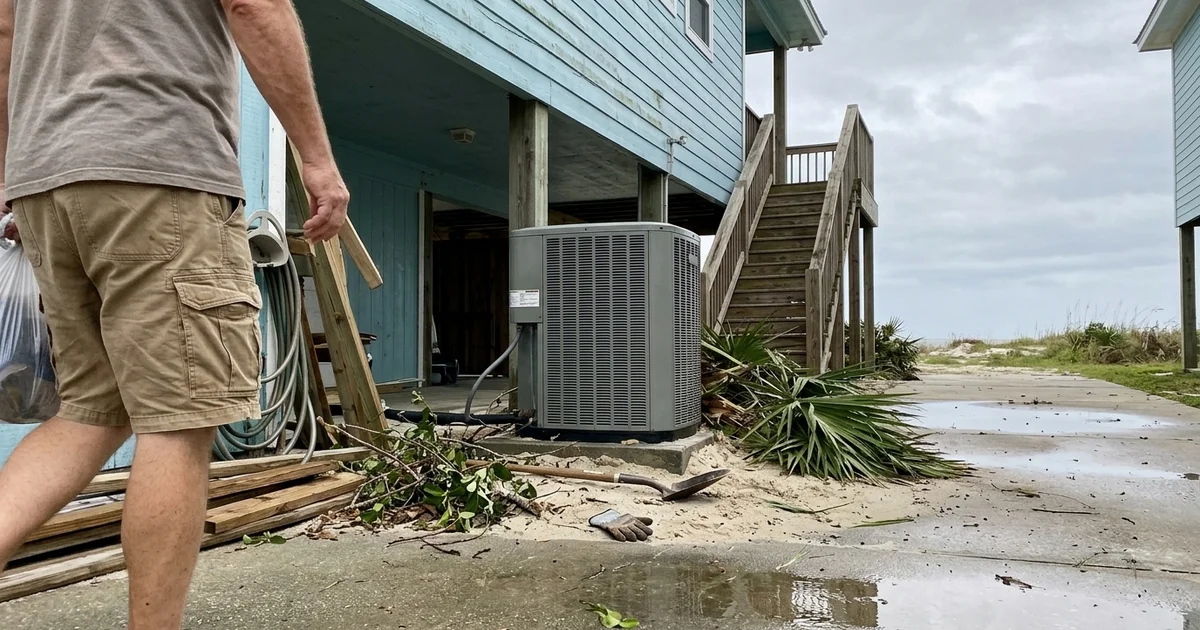
Before doing anything else, grab your phone and walk the perimeter of your outdoor condenser. You are looking for obvious signs of physical or electrical trauma.
Our technicians recommend looking closely for these specific red flags:
- Water line marks: Look on the unit or the house siding to see if floodwater reached the electrical components.
- Mud, sand, or debris: Check inside the fan grille or packed against the delicate coil fins.
- Projectiles: Watch out for branches, palm fronds, or shingles lodged in the unit.
- Cabinet damage: Dents, bent fins, or a crushed metal casing indicate heavy impact.
- Foundation shifts: A tilted unit or one knocked off its concrete pad stresses the refrigerant lines.
- Downed power lines: Stay away entirely and call Baldwin EMC at (251) 989-6247 or Riviera Utilities at (251) 943-5001 immediately.
Owners of raised homes must also inspect their platform anchors. Storm surge and 100-mph winds can easily loosen the tie-downs required by Alabama building codes. Saltwater is another silent killer for coastal properties. The salt spray accelerates corrosion on aluminum fins and copper tubing, often destroying uncoated coils within a few years if not rinsed.
Step 2: When NOT to Restart
Sometimes, the safest action is taking no action at all. Attempting to run compromised equipment is a major fire hazard.
Our safety protocol is very clear on when to keep the power off. Do not turn the system on if you spot any of the following issues:
| Situation | The Real-World Consequence |
|---|---|
| Floodwater reached the outdoor unit | Water in the compressor and electrical panel causes immediate short circuits and catastrophic failure. |
| Salt water reached the system | Salt corrodes electrical terminals and metal parts rapidly, even after the components dry out. |
| The indoor air handler flooded | Wet ductwork and soaked electrical parts breed mold and create severe fire risks. |
| The unit is visibly damaged | Shifted equipment likely means the pressurized refrigerant lines are stretched or broken. |
| You smell a burning plastic odor | This indicates active electrical damage or fried wire insulation. |
| A breaker trips again after one reset | This is a guaranteed sign of a dangerous short circuit. |
Leaving the breakers off and calling a licensed contractor is the only option in any of these scenarios. An ac flooded outdoor unit cannot just be dried out and turned back on.
Step 3: Reset in the Right Order
If your visual inspection comes back clean, you can attempt a controlled restart. Following a specific sequence prevents sudden voltage draws.
Our step-by-step method protects the sensitive internal parts.
The Safe Restart Sequence
- Set the thermostat to OFF. Do this before touching any electrical panels.
- Clear debris gently. Remove leaves or small twigs from around the outdoor unit.
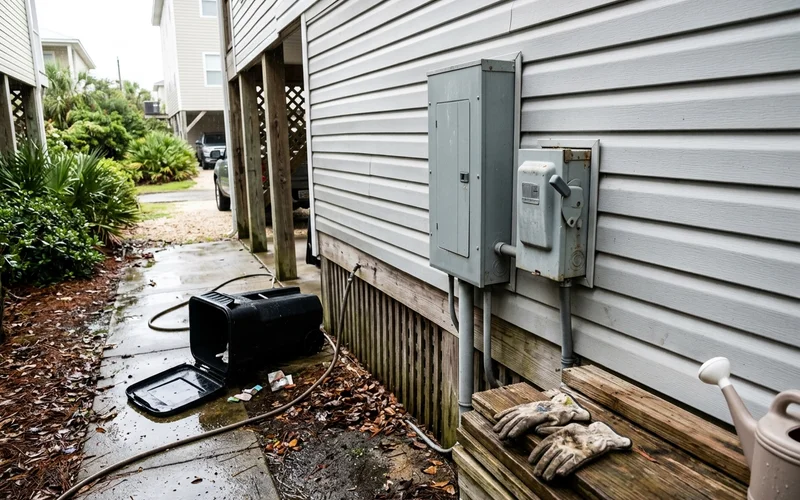
- Check the breakers. Most residential setups have one breaker for the indoor air handler and one for the outdoor unit. Reset any tripped switches, but only do this once.
- Verify the outdoor disconnect. Ensure the gray box near the unit is fully in the ON position.
- Wait exactly 30 minutes. This allows the compressor’s crankcase heater to warm the internal oil and lets system pressures equalize.
- Set the thermostat to COOL. Drop the temperature a few degrees below the current room temp.
- Watch and listen closely. The indoor blower should start first, followed by the outdoor unit.
We notice many modern systems have a built-in delay of up to five minutes after a power drop. Give it a little time before assuming the equipment is dead.
Signs of Surge Damage: AC Not Working After Storm
The biggest threat to your comfort is often the moment the power grid comes back online. The sudden return of electricity creates massive voltage spikes.
Our repair logs show that ac surge damage is the number one cause of post-storm breakdowns in South Baldwin. These power fluctuations typically destroy specific electrical components:
- Capacitors: These provide the initial jolt of energy to start the motors. They frequently bulge, leak fluid, or fail completely during a surge.
- Contactors: These switches allow high-voltage electricity to reach the compressor. A surge can weld them shut, causing the system to run endlessly until it burns out.
- Control boards: The computerized brains in the air handler can easily fry.
- Thermostats: A blank screen is a common indicator of a blown low-voltage fuse.
You might hear the outdoor unit humming loudly without the fan spinning. Another symptom is a system that runs continuously or trips the breaker instantly.
We highly recommend checking our guide on what to do when your AC won’t turn on for safe troubleshooting steps. This resource covers the basics before you make a call.
Document Everything for Insurance
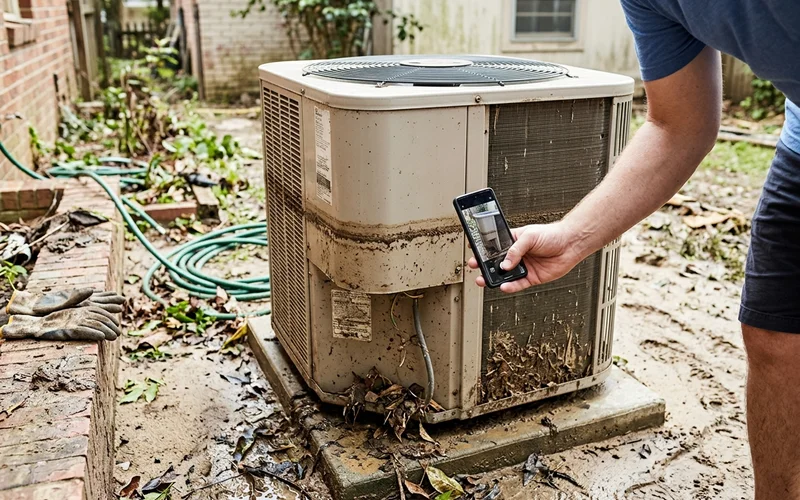
Filing a successful insurance claim requires clear proof of the damage. You must gather this evidence before starting any major cleanup or repair work.
Our team recommends taking dozens of clear, well-lit photos and videos of the site. Make sure to capture these critical details:
- The outdoor unit from all four sides, clearly showing any mud or water line marks.
- Debris resting on or packed around the equipment.
- The manufacturer data plate displaying the exact model and serial number.
- The indoor unit and any associated water damage in the attic or closet.
- Damaged concrete pads, bent stands, or kinked copper lines.
We suggest keeping all receipts for emergency repairs, like tarping a roof or temporary cooling. Your contractor’s official written inspection report will be the cornerstone of your claim.
Standard homeowner policies typically cover wind and surge damage, but floodwater intrusion usually falls under a separate National Flood Insurance Program policy. Do not throw away damaged parts until the insurance adjuster gives you the green light.
Out-of-State Owners
Managing property repairs from afar adds a layer of difficulty to storm recovery. If you own a rental in Gulf Shores or a second home in Foley, you need eyes on the ground quickly.
Our office coordinates directly with local property managers to handle these inspections. Ask your manager to visit the property and photograph the unit before a guest tries to restart it.
A licensed contractor can evaluate the system, document the exact condition for your insurance carrier, and email you a detailed estimate. This process allows you to approve necessary work remotely without flying down.
Hurricane Season Prep
The official Atlantic hurricane season stretches from June 1 through November 30. Proactive preparation is the best way to extend the life of your cooling system.
Our pre-storm checklist helps minimize the risk of catastrophic physical damage. Do these things before the wind picks up:
- Clear the perimeter: Move loose items like patio chairs, grills, and potted plants into the garage.
- Verify the tie-downs: Ensure the unit is firmly anchored to its concrete pad or raised stand to meet Alabama wind zone codes.
- Locate your switches: Know exactly where your main electrical panel and outdoor disconnect box are located.
- Kill the power: Turn the system off at the main breaker if a storm is making landfall to prevent surge damage.
We also suggest looking into a whole-home surge protector. These devices mount directly to your electrical panel and absorb the brunt of incoming voltage spikes.
Get It Inspected
Do not guess when it comes to high-voltage equipment and an ac not working after storm damage. Call (251) 270-2500 right after a storm clears if you suspect any issues.
Our phone lines are answered 24/7 to connect you with a licensed, insured contractor already working right here in South Baldwin. For a completely dead system in the sweltering heat, visit our page on emergency AC repair to get help fast.
The initial estimate is always free, and you never pay a referral fee.