
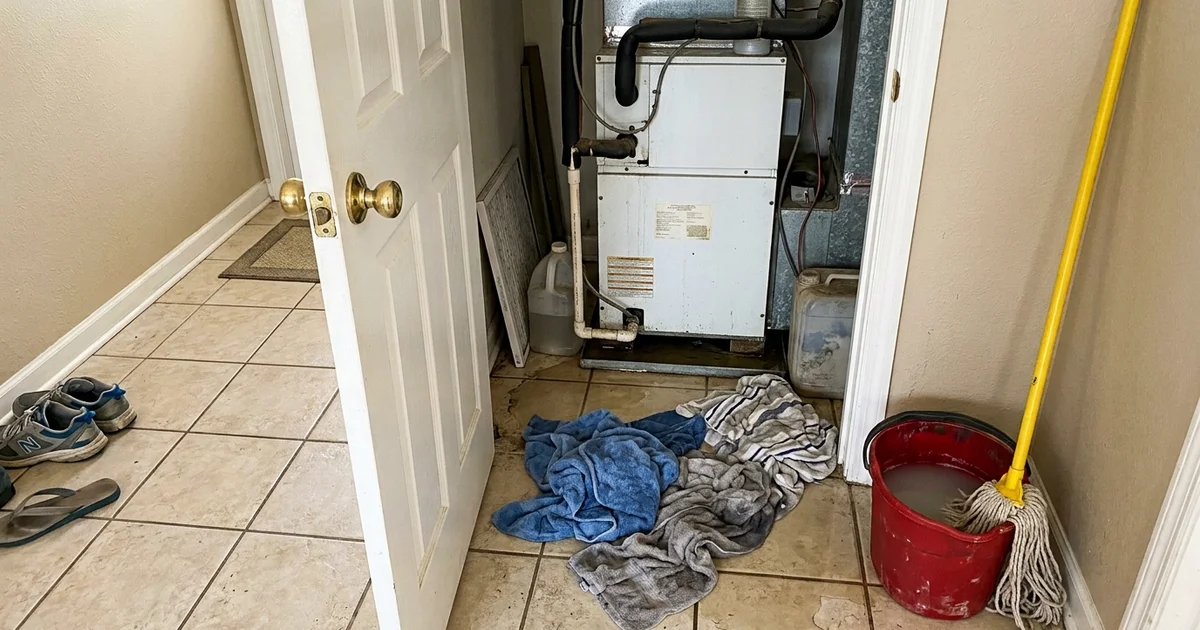
Why Your AC Is Leaking Water Inside
Finding water around your indoor AC unit, or watching a brown stain spread across the ceiling, is enough to ruin any homeowner’s day. As the team at Foley AC Repair, a local line connecting you with licensed contractors quickly, we know that an AC leaking water inside is almost always caused by a clogged condensate drain. The intense summer humidity across South Baldwin forces your system to work overtime.
An air conditioner in our coastal climate easily pulls up to 20 gallons of water a day out of the air. If that water has nowhere to go, it backs up and keeps spilling until the blockage is cleared. Our priority is to help you stop the damage before it spreads.
You need to act quickly and call for same-day AC repair right away.
Here is a breakdown of the main reasons this happens and exactly what to do next.
Right now, before anything else
Turn the AC off at the thermostat. Move furniture, rugs and anything valuable out of the way. Soak up standing water with towels or a wet vacuum. If water is coming through a ceiling, put a bucket under it and poke a small hole at the lowest point of any bulge to let it drain in one spot.
The Common Causes
Algae and slime in the condensate line
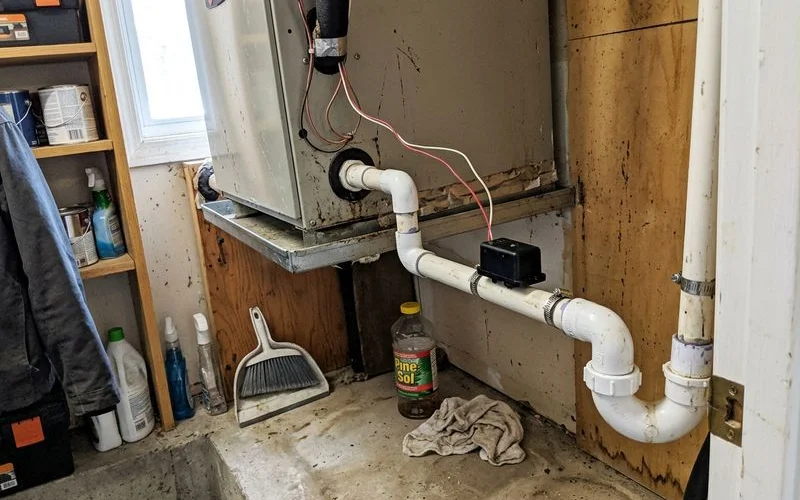
Algae buildup is the number one cause of drain clogs across South Baldwin. We find that the dark, wet, and warm interior of a PVC pipe creates a perfect environment for organic sludge. Over a long summer, this slime accumulates until it completely plugs the three-quarter-inch drain line.
Homes and rentals that run the AC continuously are especially prone to rapid algae growth. This is why regular flushing is so critical for coastal properties.
An overflowing or rusted drain pan
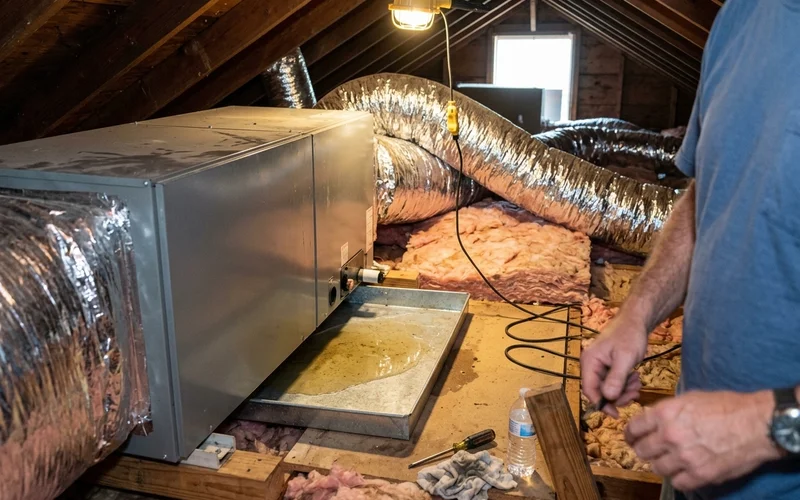
Older metal drain pans will eventually rust through, while plastic versions can become brittle and crack. Water then leaks directly out of the pan itself, bypassing the drain line entirely. We always check attic air handlers for a secondary backup pan underneath.
According to the International Residential Code, any unit installed in an attic must have this secondary pan or a safety switch to prevent property damage. If you see water pooling in that backup pan, or notice your AC overflow pan full, your primary drain has already failed. Recent data shows that ceiling water damage repairs now average between $500 and $4,000 in 2026, making early detection critical.
A tripped float switch
If your AC suddenly stops cooling and you see water in the pan, a safety device like a float switch likely did its job. We highly recommend reliable devices like the RectorSeal Safe-T-Switch SS1 or SS2 for this exact scenario. These small switches shut off the cooling cycle the moment water rises too high.
Resetting your thermostat power will not help until the water drains and the underlying clog is completely cleared. The system will simply stay locked out to protect your drywall.
A frozen coil melting
Evaporator coils often freeze solid when restricted airflow drops the temperature too low. We frequently see this happen when well-meaning homeowners use highly restrictive MERV 13 air filters. A thick filter chokes the blower motor, which causes the coil to drop below freezing.
When that block of ice eventually melts, the sudden rush of water quickly overwhelms the drain pan. Look closely for ice on the copper lines if you suspect this is the problem. Our comprehensive guide to a frozen AC coil explains the exact steps to take next.
A disconnected or damaged drain line
PVC drain lines can sometimes come apart at a glued joint if someone bumps them while working in the attic. We also notice lines sagging over time if they lack proper physical support. Condo units often tie their condensate drains into a shared building stack.
A backup several floors down can force water up into your specific line. This makes secure connections vital for multi-family buildings.
How Contractors Clear a Clogged Drain
Clearing a stubborn drain requires more than just pouring a basic chemical cleaner down the pipe. We follow a strict, professional process to ensure the entire line is clear and safe.
- Check the float switch and primary pan, removing any standing water immediately.
- Clear the line using a high-powered wet vacuum from the outside end.
- Use a compressed nitrogen blast to push out stubborn organic sludge.
- Flush the entire line and trap to confirm water flows freely without backing up.
- Inspect the drain pan for hidden rust or hairline cracks.
- Check that the float switch works and is mounted at the correct height.
- Look at the evaporator coil for dirt that could shed debris into the pan later.
| Problem found | Typical fix |
|---|---|
| Algae clog in the line | Vacuum or blow out the line with nitrogen, flush and treat |
| Rusted or cracked pan | Replace the primary or secondary pan |
| Missing or failed float switch | Install a RectorSeal safety switch |
| Frozen coil melting | Fix the airflow or refrigerant leak first |
| Broken joint or sagging line | Re-glue the PVC joint or re-pitch the drain line |
Most drain clogs are quick fixes. You get a free estimate before any work begins on your system. We make sure you know exactly what the repair costs upfront.
Condos and Stacked Units
A leaking air handler in a Gulf Shores or Orange Beach condo tower can quickly drip down into the unit below yours. We know that most HOAs hold each owner strictly responsible for their own drain line and pan maintenance. A neglected clog can easily turn into a massive repair bill for your downstairs neighbor.
Rental condos face an even higher risk because vacationing guests rarely notice a slow drip in a utility closet. Our experience shows that proactive maintenance is the only way to protect these shared spaces. If you own a beachfront property, check our guide on beach home and condo HVAC for details on HOA coordination.
Preventing the Next Leak
Routine maintenance is the only proven way to keep your drain line flowing freely. We suggest building these simple habits into your monthly home care routine.
- Treat the drain line by pouring a cup of distilled white vinegar down the cleanout every month during the summer.
- Change filters on time using a standard MERV 8 rating to prevent restricted airflow and frozen coils.
- Book a spring tune-up in April or May to flush the drain before the heavy cooling season starts.
- Check the secondary pan in your attic with a flashlight a few times a summer to catch early warning drips.
- Install a float switch if your older system lacks one, as it offers the best cheap protection for your ceilings.
When to Call
A small water leak can quickly escalate into major drywall damage if ignored. Call (251) 270-2500 immediately if water keeps coming back after you soak it up. You should also reach out if your float switch shuts the system down, ice forms on the lines, or water stains appear on your ceiling.
We answer the phone 24/7 to connect you with a licensed, insured contractor already working in South Baldwin. There is absolutely no referral fee for this helpful service.
Schedule your inspection today to protect your home from costly water repairs.