
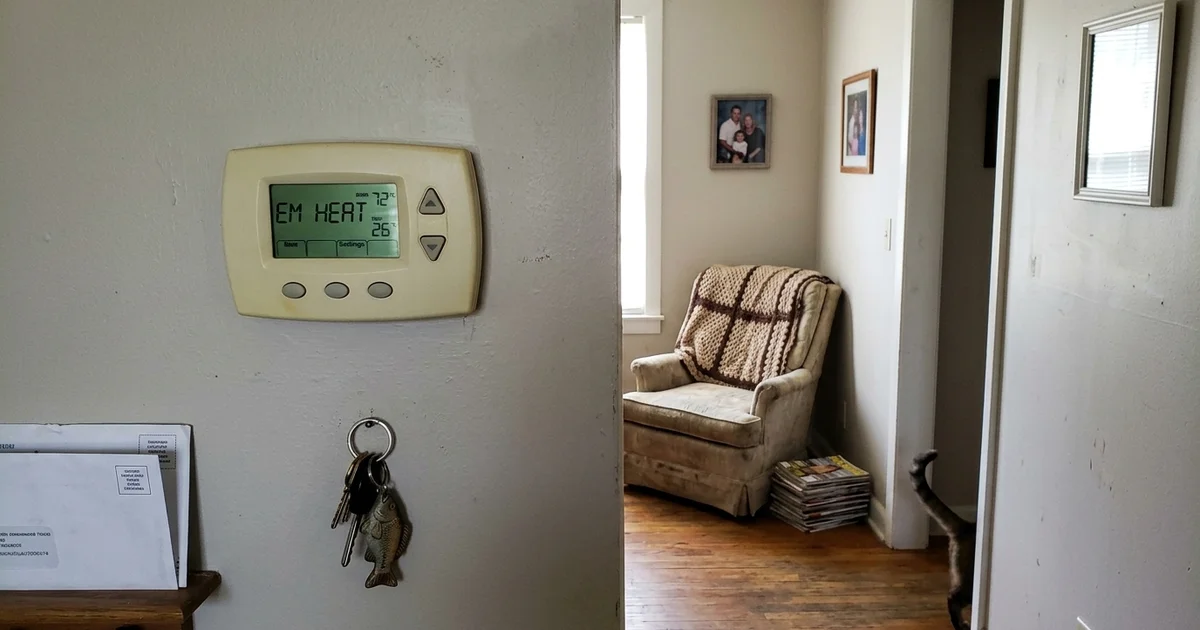
Emergency Heat in One Sentence
We know that seeing unfamiliar settings on your thermostat can cause a bit of stress. The emergency heat heat pump function simply tells your system to stop using the outdoor unit and warm the house using only electric heat strips.
This mode acts as a temporary backup for when the primary unit cannot run.
Our team strongly advises against using this mode for daily heating. If you find yourself manually switching this on, the system likely needs a professional look through heat pump repair. Ignoring the warning lights will only lead to higher costs down the line.
How Heat Pump Heating Works
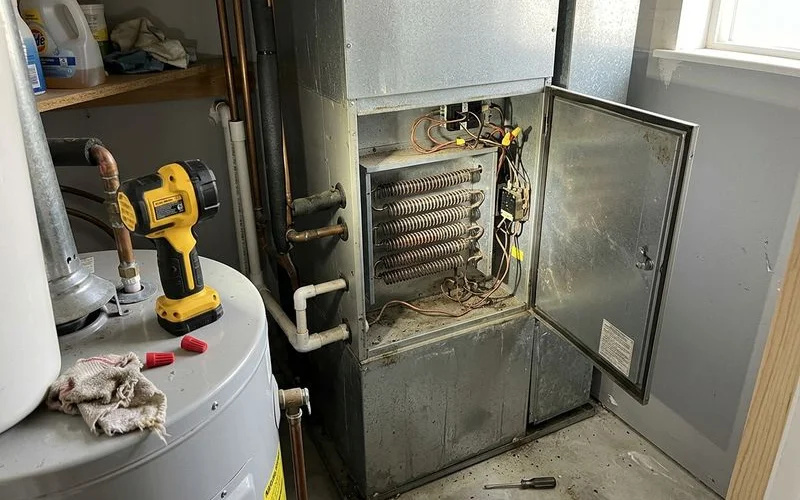
We explain to customers that a heat pump efficiently moves warmth from the outdoor air into the home instead of generating it from scratch. The process requires much less electricity than traditional heating methods. Most coastal Alabama homes also contain electric heat strips inside the indoor air handler.
Our local climate usually dictates installing backup strips sized between 5kW and 15kW for residential properties. These thick wire coils act exactly like the glowing elements inside a toaster. They produce heat directly and effectively when needed.
We see these resistance coils consume a massive amount of power compared to the standard refrigeration cycle. Your thermostat manages this backup hardware in two very distinct ways. The main heating components include:
- Outdoor condenser coil (absorbs ambient warmth)
- Refrigerant lines (transfers thermal energy inside)
- Indoor air handler (blows conditioned air through ducts)
- Electric heat strips (provides backup resistance heating)
AUX Heat vs EM Heat
We want to clarify the major differences between aux heat vs emergency heat to help you avoid high utility bills. Auxiliary heat kicks on automatically when outdoor temperatures in places like Magnolia Springs drop below 35 to 40 degrees. It also activates during a routine defrost cycle or if you bump the thermostat up by three or more degrees at once.
Our technicians consider brief periods of AUX heat completely normal during a cold snap. The screen will display “AUX” while the heat strips assist the main unit. This process ensures your house stays comfortable while the outdoor unit catches up.
We always remind homeowners that emergency heat requires a manual flip of a switch. This action completely locks out the outdoor compressor and runs solely on the resistance coils. The table below breaks down the key differences.
| Feature | Auxiliary heat (AUX) | Emergency heat (EM) |
|---|---|---|
| Who turns it on | The thermostat, automatically | You, manually |
| Heat pump running? | Yes, heat strips add to it | No, heat strips only |
| When it is used | Cold mornings below 40°F, defrost, big setpoint jumps | Heat pump failed or iced solid |
| Cost to run | Moderate | Highest |
| Normal? | Yes, in short bursts | Only as a temporary backup |
What Heat Strips Cost to Run
We see many customers shocked by their winter power bills since running emergency settings costs significantly more than normal operation. Heat strips create warmth directly from electricity instead of efficiently transferring it from outside. A standard 10kW heat strip running continuously for 10 hours consumes 100 kilowatt-hours of power.
Our local Baldwin EMC residential electricity rate averages roughly 13.29 cents per kilowatt-hour in 2026. That means a single day of relying solely on a 10kW backup strip can add over $30 to your utility bill. The heat pump typically delivers three to four times more warmth for that exact same amount of electricity.
We highly suggest monitoring your em heat thermostat closely if the weather turns freezing. A few days on this manual setting will noticeably inflate your monthly statement. Relying on it for a whole winter will result in an astronomical expense.
| Heating Mode | Estimated Daily Cost (Constant Run) | Efficiency Level |
|---|---|---|
| Standard Heat Pump | $8 to $10 | Highest (Moves Heat) |
| Emergency Heat (10kW Strips) | $31 to $35 | Lowest (Creates Heat) |
When to Switch EM Heat On
We get asked frequently about the right moment to actually use this manual override. You should only activate emergency heat when a catastrophic failure prevents the primary equipment from functioning. Use emergency heat when:
- The outdoor unit has failed and will not turn on
- The outdoor coil is iced solid and the automatic defrost cycle is not clearing it
- The outdoor equipment was damaged or flooded during a Gulf Coast storm and requires inspection
- A licensed contractor explicitly tells you to use it until a replacement part arrives
Our team urges you to never use this setting just because the house feels chilly on a January morning. A working system easily handles most Elberta and Foley winter weather by calling in AUX heat automatically when needed. Constant reliance on backup power points to a larger mechanical issue.
Signs the Heat Pump Itself Has Failed
We recommend checking a few basic symptoms if you suspect your primary heating equipment has stopped working. Recognizing a mechanical failure early can save you from burning through hundreds of dollars in unnecessary electrical costs. Watch for these specific warning signs:
- AUX shows constantly in mild weather, like 45 or 50 degrees outside
- The outdoor unit is completely silent when the thermostat calls for heat
- The outdoor fan runs but the air is cool and the house is not warming
- The exterior coil is covered in thick ice that does not melt away
- Your power bill jumps dramatically in winter without a change in weather or habits
We consider any of these symptoms a clear signal to request a professional diagnostic. Check the main breaker first to ensure the unit has power before making the call. See heat pump not heating for other common causes and troubleshooting steps.
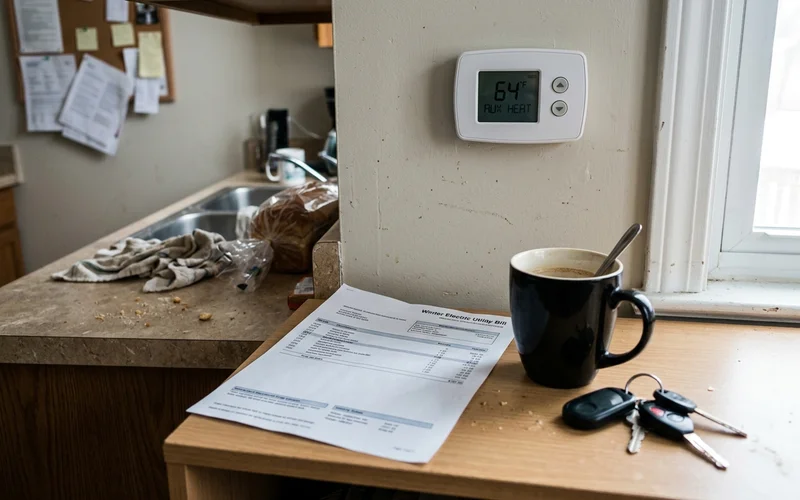
Thinking About Your Next System?
We understand that replacing an aging HVAC unit requires careful financial planning. The salty, humid air along the Gulf Coast typically limits an outdoor condenser’s lifespan to about 10 to 12 years. Watch for these signs of a dying compressor:
- Heat strips running frequently in mild weather
- Unexplained spikes in monthly power bills
- Strange noises coming from the outdoor cabinet
Our installation experts can help you evaluate all available heating technologies. You might be weighing the benefits of a traditional setup against a gas furnace or a dual-fuel system. Read heat pump vs furnace on the Gulf Coast to compare your options thoroughly.
Get the Heat Pump Checked
We are always ready to help when your emergency heat heat pump equipment starts acting up. Running continuously on EM heat puts a massive strain on your wallet and your indoor air handler.
Call (251) 270-2500 right away if your system cannot maintain a comfortable temperature.
Our dispatchers connect you with a licensed, insured contractor who services homes across South Baldwin County. The phone line is answered 24/7 for your convenience. You will receive a free estimate before any work begins, and there is never a referral fee.