
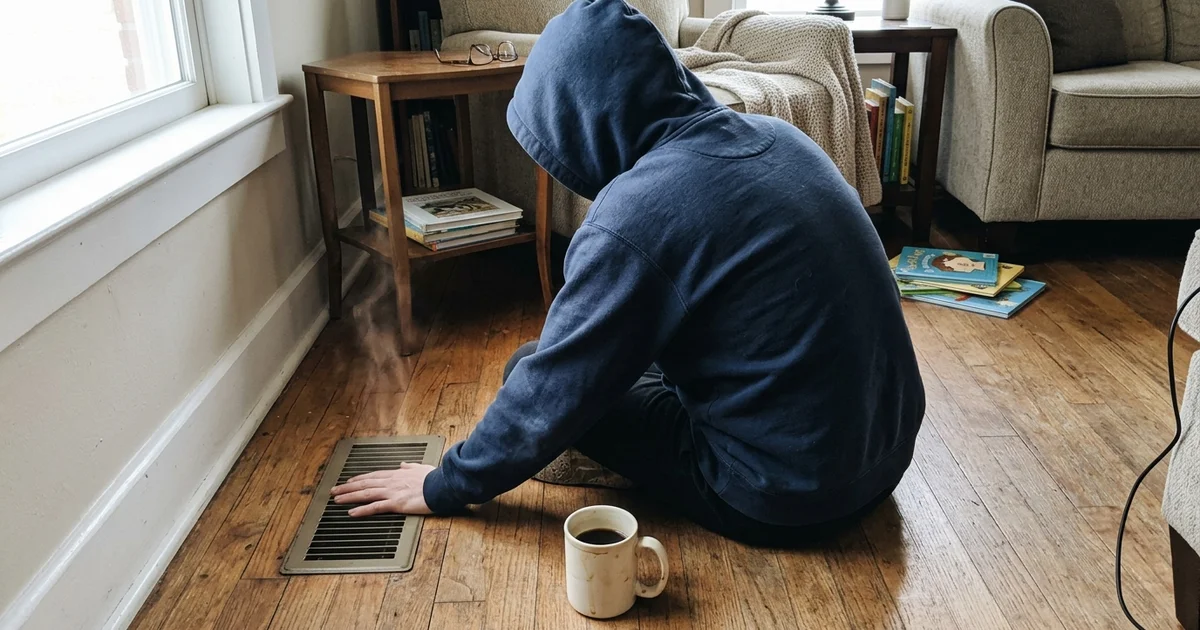
When the House Will Not Warm Up
We know the drill when a Baldwin County cold front hits overnight. The house feels like an icebox regardless of your thermostat setting. Local January average lows usually sit around 43 degrees, but those sudden freezes push systems to their absolute limits.
Our technicians at Foley AC Repair find that a heat pump not heating properly on the coast almost always points to a struggling compressor or a failed backup heat strip. Finding the exact cause requires a quick process of elimination.
These straightforward checks can save you a lot of time and money.
We recommend working through the safe steps below before making any big decisions. A quick system reset might be all you need to get warm air flowing again. Be sure to call for heat pump repair in Foley if your rooms remain completely freezing after troubleshooting.
First, Is It Really Not Heating?
We use a simple temperature benchmark when diagnosing heating systems in the field. Heat pump air feels completely different from traditional gas furnace air. The real test is simply checking if the room temperature is steadily rising toward your thermostat setpoint.
Our teams often explain these exact temperature differences to concerned homeowners. Here is a quick look at the output temperatures you will notice at the register:
- Gas Furnace Output: Typically registers between 120 and 130 degrees, providing a sharp blast of intense heat.
- Heat Pump Output: Usually blows at a milder 90 to 100 degrees, creating a slower and more gradual warmth.
This lower temperature can feel lukewarm on your skin even when it is actively heating your home.
We always ask homeowners to observe the system for at least twenty minutes before assuming it is broken. During a normal defrost cycle, the equipment temporarily switches into cooling mode to melt ice off the outdoor coil. These automatic cycles trigger every 30, 60, or 90 minutes during freezing weather based on your control board settings.
Our office receives many urgent phone calls because the vents briefly blow cool air and the outdoor unit emits visible steam. This specific behavior is entirely normal and protects the compressor from freezing solid. You can review our guide on the heat pump defrost cycle to understand this process in detail.
Safe Checks You Can Make
Thermostat mode and settings
We suggest confirming a few specific details on your control panel right now. Thermostat settings are the very first thing you should verify when the house feels chilly. A surprisingly high number of service visits stem from simple configuration errors.
Our technicians frequently discover smart thermostats like the Google Nest or ecobee stuck in an energy-saving state. Always confirm the following settings on your control panel:
- Is the system set firmly to HEAT, rather than COOL, OFF, or an AUTO mode with a conflicting temperature range?
- Is the target setpoint actively adjusted above the current room temperature?
- Are the batteries fresh and fully charged?
- Have you checked your smart thermostat app for active schedules, eco modes, or remote lockouts?
These eco modes are especially common in short-term rental properties around Summerdale and Magnolia Springs. They automatically drop the temperature to save power when the sensors assume the house is empty.
Our best advice is to disable these automatic away modes during severe winter freezes. This simple step keeps your equipment running consistently. You will avoid waking up to a freezing living room.
Filter
We see restricted airflow cause complete system shutdowns on a weekly basis. A clogged filter cuts airflow drastically and forces the system to trip its high-limit safety switch. High-efficiency filters with a MERV 13 rating catch a lot of dust, but they also clog much faster than standard MERV 8 filters.
Our next troubleshooting step involves checking the blower fan filter. The blower motor simply cannot pull enough air through a thick wall of trapped dirt. Replace your filter immediately if it looks dirty or gray.
Breakers
We advise you to locate these specific switches in your main electrical panel. Heat strips usually have their own dedicated breaker, which is often a large 30 to 60-amp double breaker. The outdoor compressor unit has another separate breaker typically rated between 20 and 40 amps.
Our technicians always check the electrical panel for tripped safety switches. You can try to reset any tripped breaker firmly one time. If the switch immediately trips again, you must leave it off and call a professional to prevent electrical fires.
Outdoor unit
We highly recommend taking a quick walk outside to inspect the exterior equipment.
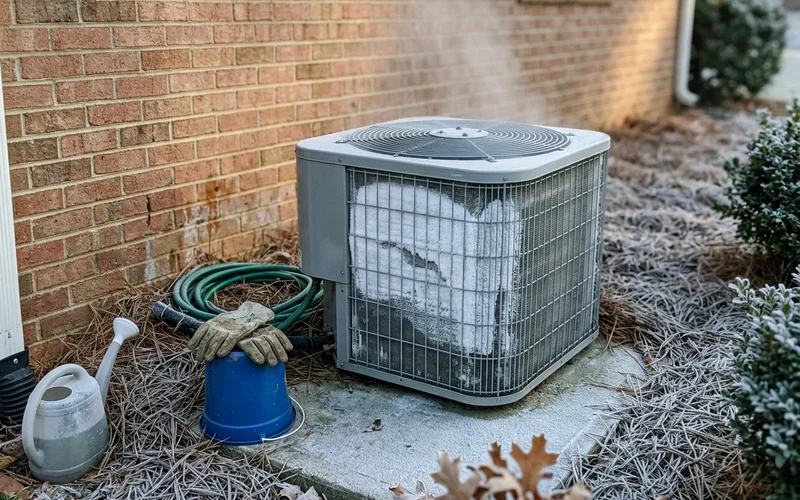
A thin layer of frost that clears every so often is completely normal during the winter. The defrost cycle will melt this light accumulation automatically.
Our repair crews look for severe ice buildup that completely encases the aluminum fins. A solid block of ice, a fan blade that is not spinning, or a completely silent machine all point to a serious mechanical failure. These visual clues help contractors diagnose the problem much faster when they arrive.
Common Causes
We categorize most issues with a heat pump not working in cold weather into a few specific equipment failures. These mechanical problems require professional tools and training to fix safely. The details below explain exactly what goes wrong inside the cabinet.
Stuck reversing valve
Our first prime suspect is often a faulty reversing valve. The reversing valve is the brass component that physically switches the heat pump between heating and cooling modes. If this valve sticks in the cooling position, the system becomes a heat pump blowing cold air directly into your rooms during the winter.
We frequently find that the electrical solenoid coil has failed, or the internal sliding mechanism is jammed. You will usually hear a loud whoosh sound when this valve shifts normally. Replacing a reversing valve stuck in the wrong position is a major contractor repair that requires handling high-pressure refrigerant.
Low refrigerant
We constantly encounter systems struggling due to a low refrigerant charge. A heat pump low on refrigerant simply cannot absorb and move enough heat indoors. The system will run constantly, blow lukewarm air, and eventually freeze into a solid block of ice.
Our industry is currently phasing out older R-410A refrigerants, making these repairs more expensive. Low pressure always indicates a physical leak in the copper lines or coils. A technician must find and permanently seal this leak before adding any new chemical charge.
Failed heat strips
We rely heavily on backup heat during those rare mornings when temperatures drop near freezing. The heat pump needs extra help from its auxiliary heat strips to keep the house comfortable. If a heating element, its electrical sequencer, or a thermal limit switch fails, the system loses its winter muscle.
Our diagnostic tests usually reveal that the house stays warm on mild days but falls rapidly behind when the weather turns harsh. These electric resistance strips act like giant hair dryers inside your ductwork. A broken sequencer prevents these powerful coils from turning on when the thermostat calls for emergency heat.
Defrost faults
We fix a lot of frozen outdoor coils caused by failing defrost controls. If the electronic defrost board or the bimetallic temperature sensor breaks, the outdoor unit cannot trigger its melting cycle. The bimetallic sensor normally snaps shut at 32 degrees to tell the computer that ice is forming.
We see the outdoor coils completely ice over when this communication fails. The heat pump instantly stops moving warmth into the house as the ice blocks all airflow. Your thermostat might show the AUX heat running constantly as the indoor strips try to compensate for the frozen compressor.
Outdoor fan or compressor problems
We routinely replace worn-out electrical components after a punishing Alabama summer. A failed fan motor, a blown dual-run capacitor, or a pitted contactor can stop the outdoor unit entirely. These critical parts manage the heavy electrical loads required to spin the fan blades and pump the refrigerant.
Our technicians measure a capacitor’s strength in microfarads to see if it has dropped below its rated capacity. A weak capacitor will leave the compressor humming loudly but unable to start. You will notice the outdoor cabinet sits completely silent while the indoor fan continues to circulate cold air.
Duct leaks
We always remind homeowners that the problem might not be the heating equipment at all. Leaky ducts in an unconditioned attic or under a raised home can dump perfectly warm air outside before it ever reaches your living room.
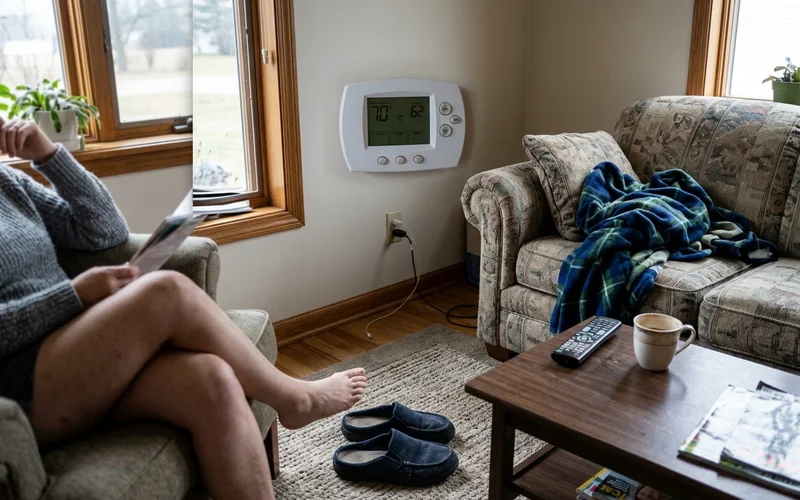
The Environmental Protection Agency and ENERGY STAR report that a typical home loses 20 to 30 percent of its conditioned air to leaky ductwork.
Our duct inspections often reveal disconnected joints or torn flexible tubing hiding in the crawlspace. This massive energy loss forces your system to run continuously just to maintain a baseline temperature. Sealing these hidden gaps provides an immediate boost to your indoor comfort and lowers your monthly power bills.
Using Emergency Heat While You Wait
We suggest a temporary workaround if your main outdoor compressor has completely failed. Switching the thermostat to EM HEAT or Emergency Heat bypasses the heat pump and runs only the indoor electric heat strips. This setting will successfully keep the house warm, but these resistance strips consume significantly more electricity.
Our advice is to use this costly setting only as a short-term stopgap until a technician arrives. Running emergency heat for several days will cause a massive spike in your utility bill. You can learn more about how to engage this feature in our full guide to emergency heat.
We created this quick diagnostic table to help you identify the most likely culprit based on your symptoms.
| What you notice at home | Likely problem area | Typical repair approach |
|---|---|---|
| Cool air inside, outdoor unit running, no ice | Reversing valve or refrigerant leak | Requires pressure tests and possible R-410A recharge |
| Warm on mild days, freezing on cold mornings | Backup heat strips or sequencer | Electrical testing of 30 to 60-amp circuits |
| Outdoor coil completely encased in solid ice | Defrost control board or bimetallic sensor | Replaces sensors that fail at 32 degrees |
| Outdoor unit sits completely silent | Electrical, dual-run capacitor, or contactor | Tests microfarads and high-voltage connections |
| AUX heat on constantly on the thermostat | Heat pump is not doing its share of the work | Full system diagnostic to restore efficiency |
These visual signs provide a great head start for any repair professional. Writing down these symptoms will streamline the scheduling process.
When to Call
We recommend calling for immediate support if your heat pump not heating leaves the house cold after you complete the safe checks. You should reach out immediately if the outdoor unit is iced solid, if the breakers continuously trip, or if you smell an electrical burning odor.
Older adults, infants, and pets are at serious risk in a freezing house, so please do not delay. Our dispatch team is ready to help you restore your comfort today.
Call (251) 270-2500 to speak directly with a local professional.
The phone line is answered 24/7, and same-day service is available across most of South Baldwin County. We provide after-hours emergency help during the coldest coastal nights of the year.
Every customer receives a free, transparent estimate before any mechanical work begins. There is never a referral fee to worry about when you schedule an appointment.