
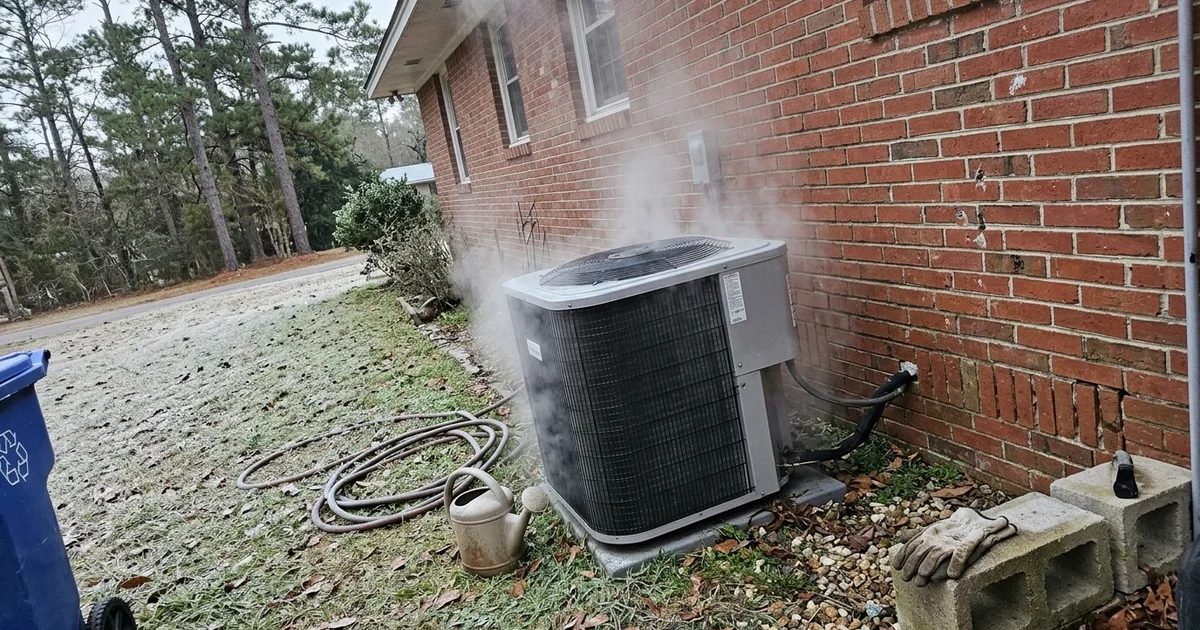
That Steam Is Usually Normal
We often get calls from Foley homeowners panicking about smoke pouring from their outdoor unit on a chilly January morning. Seeing your heat pump steaming is actually a normal event, and it means your heat pump defrost cycle is working perfectly.
Our technicians see this constantly when temperatures hover between 25 and 35 degrees Fahrenheit. This specific temperature range is the prime zone for heavy frost buildup in South Baldwin.
We created this guide to explain exactly what a normal cycle looks like.
You will learn the difference between standard operation and when it is time to schedule a heat pump repair.
What a Defrost Cycle Is
A defrost cycle is simply your system’s built-in defense against frozen coils. The unit temporarily reverses itself into an air conditioner to send hot refrigerant to the outdoor coil to melt the ice.
We see this process activate frequently during damp South Baldwin winter mornings. The outdoor coil must drop below the ambient air temperature to pull heat from the environment. Frost forms rapidly when the humidity is high and temperatures dip near freezing.
Our crews know that a frosted coil cannot absorb heat efficiently. The defrost control board dictates exactly when this cycle starts. Modern systems often use demand defrost sensors, while older units rely on simple timers set to 30, 60, or 90 minutes.
We always check this board during a diagnostic visit. The standard sequence looks like this:
- Switches the reversing valve to cooling mode for a few minutes.
- Stops the outdoor fan to trap the heat around the icy coil.
- Sends hot refrigerant, such as R-410A, through the outdoor coil to melt the frost.
- Turns on the indoor heat strips so air from the vents does not blow cold into your home.
- Switches back to standard heating mode once the coil reaches a set temperature.
Normal Defrost Signs
Normal defrost behavior includes brief clouds of steam, strange whooshing noises, and temporary fan shutdowns. These signs indicate your system is properly shedding the ice buildup.
We compiled a quick reference chart to help you identify standard operation versus a potential issue. A typical cycle lasts anywhere from 5 to 15 minutes.
Our local clients usually notice this happening every 30 to 90 minutes during wet, freezing weather.
| What you notice | Normal? |
|---|---|
| Steam or vapor rising from the outdoor unit | Yes |
| A whoosh or hiss when it switches | Yes |
| Outdoor fan stops for a few minutes | Yes |
| Water dripping or pooling under the unit | Yes |
| Thermostat shows AUX heat briefly | Yes |
| Light, even frost that clears every so often | Yes |
| Air from indoor vents feels slightly cooler | Yes |
When Ice Means a Problem
A solid block of ice encasing your outdoor unit is the primary indicator of a serious problem. Normal frost looks like a light, white dusting, while problematic ice forms a thick, impenetrable shell.
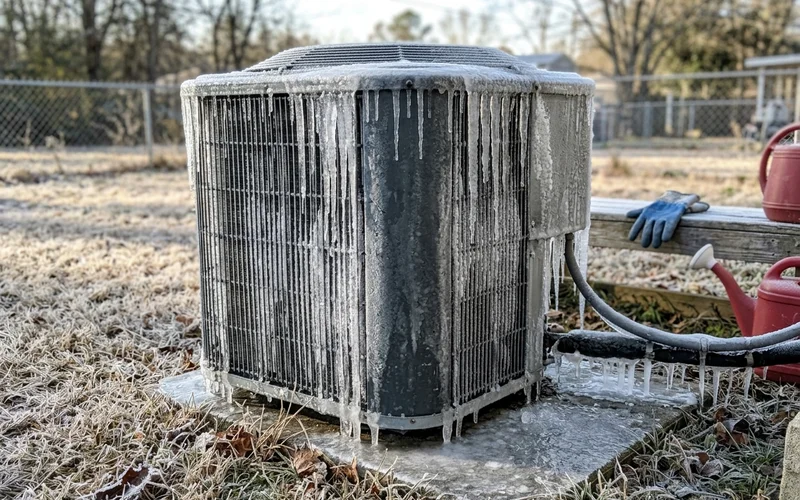
We strongly advise scheduling a service call if the system looks like a glacier. A failing component can cause permanent compressor damage if left running in this state.
Our technicians look for these specific red flags when diagnosing ice on heat pump units:
- The whole coil encased in solid ice that does not clear after an hour or two.
- Ice on top of the unit or thickly wrapping the fan blades.
- The fan trying to turn against ice, making a loud grinding sound.
- The house not warming, or the thermostat showing AUX or EM heat constantly.
- Ice building from the bottom up, which can mean meltwater cannot drain away.
- Ice creeping along the refrigerant lines running into your house.
Common Defrost Faults
The most common reasons for a failed defrost cycle involve faulty sensors, low refrigerant, or restricted airflow. These mechanical and electrical issues prevent the system from accurately measuring coil temperatures. We test a very specific sequence of parts when a unit freezes over.
Electrical and Control Failures
A heat pump defrost board acts as the brain of the outdoor unit. It fails to trigger the melting process if the logic chips or connected sensors malfunction. Our diagnostic tools help us pinpoint exactly where the communication breakdown occurs.
- Failed defrost sensor: If the sensor on the coil gives a bad reading, the board may never start defrost, or it may end it too soon.
- Failed defrost control board: The board runs the defrost logic. When it fails, defrost stops working entirely and ice builds rapidly.
Mechanical System Issues
The physical components that shift the heat pump into its melting phase take a lot of wear and tear. A stuck valve or a failing motor will disrupt the entire cycle. We often find that mechanical wear is the root cause in units older than eight years.
- Stuck reversing valve: Defrost relies on the reversing valve switching modes. A sticking valve can prevent the system from sending hot gas outdoors.
- Outdoor fan problems: A fan that runs during defrost, or does not run at all, completely throws off the cycle.
Refrigerant and Airflow Problems
Environmental factors and charge levels drastically affect how quickly frost accumulates. The system needs a specific balance of pressure and airflow to keep ice at bay. Our team regularly sees airflow restrictions causing major headaches for homeowners in Summerdale and Elberta.
- Low refrigerant: A system low on refrigerant runs a much colder coil and ices up faster than the standard cycle can clear.
- Drainage and placement: Units sitting too low, in a spot where meltwater cannot drain, or under a roof drip line can refreeze melted water around the base. Maintaining 18 to 24 inches of clearance around the unit is essential to prevent this buildup.
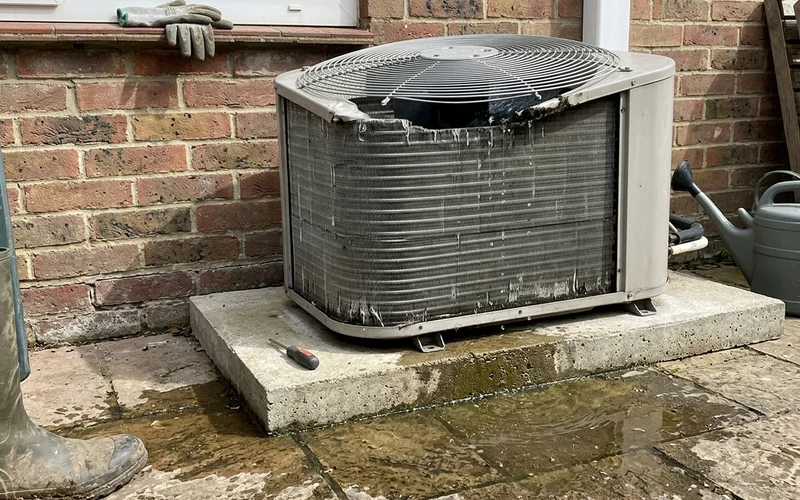
What to Do if the Unit Is Iced Solid
Switching your thermostat to Emergency Heat is the very first step you should take if the unit is completely frozen. This action keeps your home warm while safely shutting off the struggling outdoor equipment.
We recommend following a strict protocol to prevent permanent damage to the delicate aluminum fins. You can easily puncture the pressurized coils if you try to forcefully remove the ice.
Our technicians have seen homeowners cause thousands of dollars in damage with a butter knife or ice pick.
- Do not chip or scrape the ice. You can easily puncture the coil, causing a massive refrigerant leak.
- Do not pour hot water on it. It can damage the internal fins due to rapid expansion and may quickly refreeze in the base.
- Switch the thermostat to EM HEAT to keep the house warm without running the outdoor unit.
- Check for obvious causes like a gutter dripping directly onto the unit or heavy debris blocking the sides.
- Call a contractor to safely diagnose the defrost controls, test the reversing valve, and check the refrigerant charge.
If the house is also not warming, see our guide on heat pump not heating for other potential causes.
Get It Checked
Calling a professional is the fastest way to resolve persistent heat pump icing issues. You do not want to risk running a frozen system and burning out the compressor.
We operate a local dispatch line designed to get a licensed contractor to your South Baldwin home quickly.
Call (251) 270-2500.
We connect you with a licensed, insured contractor who works on heat pumps across South Baldwin. The phone is answered 24/7, you get a free estimate before any work begins, and there is no referral fee.