
The Short Answer: It Depends on the House, Not Just the Square Feet
If you are getting quotes to replace an AC in South Baldwin, one of the most important numbers on the quote is the size, measured in tons. It is also one of the most commonly guessed. A lot of systems are sized with a rule of thumb, something like one ton per so many square feet. In a humid coastal climate, that shortcut often leads to an oversized system and a clammy house. When you ask for a free replacement quote, ask how the contractor sized it.
Why Bigger Is Worse in a Humid Climate
An AC does two jobs: it lowers the temperature and removes moisture. The temperature part happens quickly. The moisture part takes longer, because the coil needs to run cold for a while before water really starts condensing and draining away.
An oversized system cools the air so fast that the thermostat is satisfied in a few minutes. It shuts off before it has done much dehumidifying. Then it starts again, and again. This is short cycling, and in a Gulf Coast home it leads to:
- A house that feels cool but damp
- Indoor humidity above 60 percent, which invites mold and musty smells
- More wear on the compressor from constant starts
- Higher bills than a right-sized system
A correctly sized system runs longer, steadier cycles and keeps humidity in check.
What a Manual J Load Calculation Covers
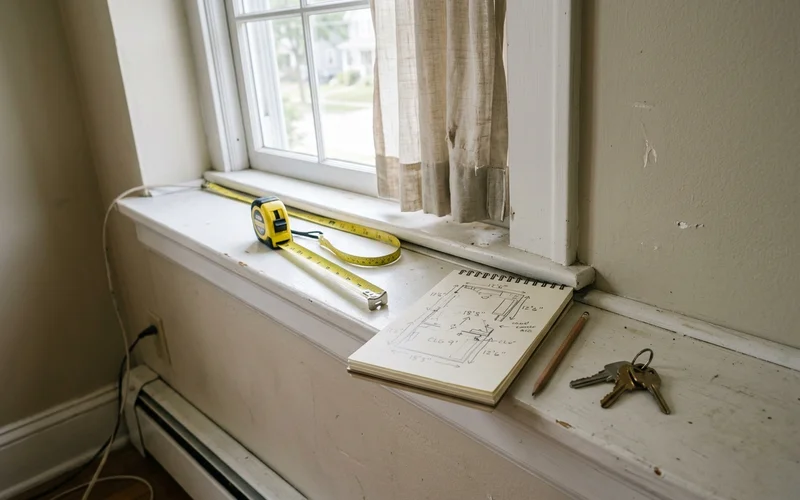
Manual J is the industry-standard method for calculating how much heating and cooling a home needs. Instead of a single square-foot number, it looks at the actual house:
- Square footage and ceiling heights, room by room
- Insulation levels in walls, attic and floors
- Window size, type and which direction they face
- Air leakage
- Duct location and condition
- Number of occupants and heat-producing appliances
- Local design temperatures and humidity
A contractor doing a proper calculation will walk the house, measure, and ask questions. It takes longer than a quick look, and that is a good sign.
How Raised Beach Houses Change the Math
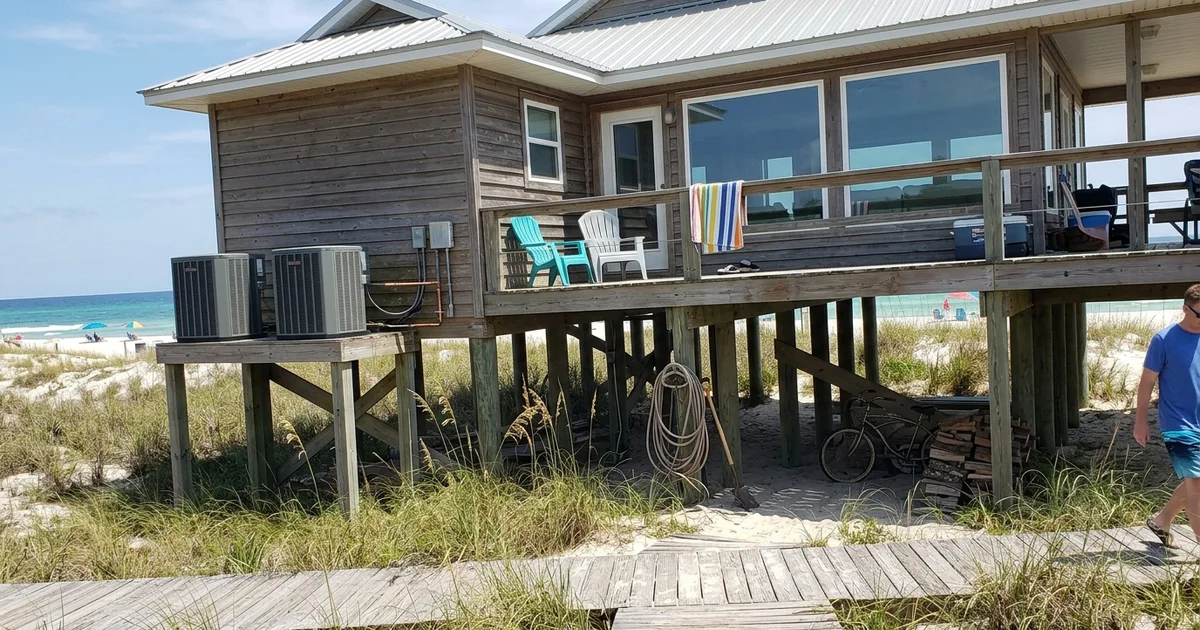
Raised homes on pilings are common from Gulf Shores to Bon Secour, and they have a few quirks:
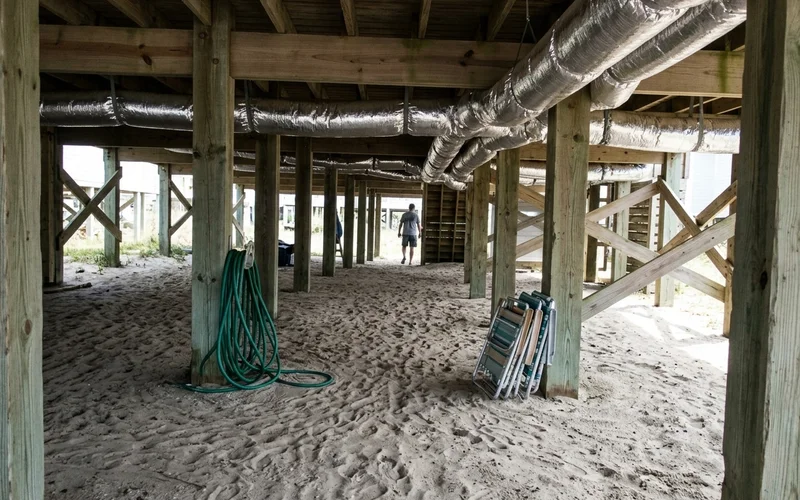
Exposed floors. The floor sits above open air instead of on a slab or over a closed crawlspace. Without good floor insulation, it gains heat all summer.
Ducts under the house. Ductwork running under the floor is exposed to hot, humid air. Leaks pull that air in, and poor insulation lets ducts sweat and lose cooling.
Big Gulf-facing windows. Views are the point of a beach house, but large south- and west-facing glass adds serious afternoon heat.
Wind and exposure. Raised homes catch more wind, which can increase air leakage.
These can push the load up, but not always by as much as people expect. Sometimes fixing duct leaks or adding floor insulation reduces the size needed. That is why the calculation matters more than a guess.
Other Coastal Considerations
- Condos often have less exposed wall area and gain heat from neighbors, so they can need less capacity than a house of the same size.
- Rentals with many guests add heat and moisture from people, cooking and showers.
- Homes that sit empty benefit from equipment that controls humidity well at low loads.
Variable-Speed and Two-Stage Options
If your home’s load swings a lot, a variable-speed or two-stage system can help. These run at lower capacity most of the time, with long, quiet cycles that are very good at removing moisture, then ramp up on the hottest afternoons. A variable-speed blower alone also improves dehumidifying. In humid coastal homes, these features are often worth the extra cost.
| Sizing approach | Result in a humid home |
|---|---|
| Rule of thumb, rounded up | Often oversized, clammy, short cycling |
| Match the old unit | Repeats any past mistakes |
| Manual J calculation | Right-sized, longer cycles, better humidity |
| Manual J plus variable speed | Best humidity control across seasons |
Questions to Ask on a Replacement Quote
- Did you do a load calculation? Can I see the result?
- How does this size compare to my current system, and why?
- What did you find with my ductwork?
- Would a variable-speed or two-stage option help my humidity?
Call (251) 270-2500 for free replacement quotes from licensed, insured contractors who size for the coast. There is no referral fee.