
You Have Called. Now What?
Your AC has quit, you have called for emergency AC repair, and a contractor is on the way. The next few hours matter. In a Gulf Coast summer, a house can heat up fast, and humidity climbs right behind it. Here is how to keep people, pets and the property safe, and how to make the visit go faster when the contractor arrives.
Heat Safety First
On a hot July afternoon in Foley, a house without AC can climb into the high 80s or beyond within hours, and the humidity makes it feel worse. Heat is a real health risk, not just discomfort.
Watch the people most at risk: older adults, infants and young children, anyone pregnant, and anyone with heart, lung or kidney conditions or on certain medications.
- Drink water regularly, even if you do not feel thirsty.
- Wear light, loose clothing.
- Take cool showers or use damp cloths on the neck and wrists.
- Stay on the lowest floor. Heat rises, and upstairs rooms get hottest.
- If anyone feels dizzy, confused, nauseated or stops sweating, get them somewhere cool and seek medical help.
If it will be hours before the repair, consider a trip to somewhere air-conditioned, such as a friend’s house, a library or a store.
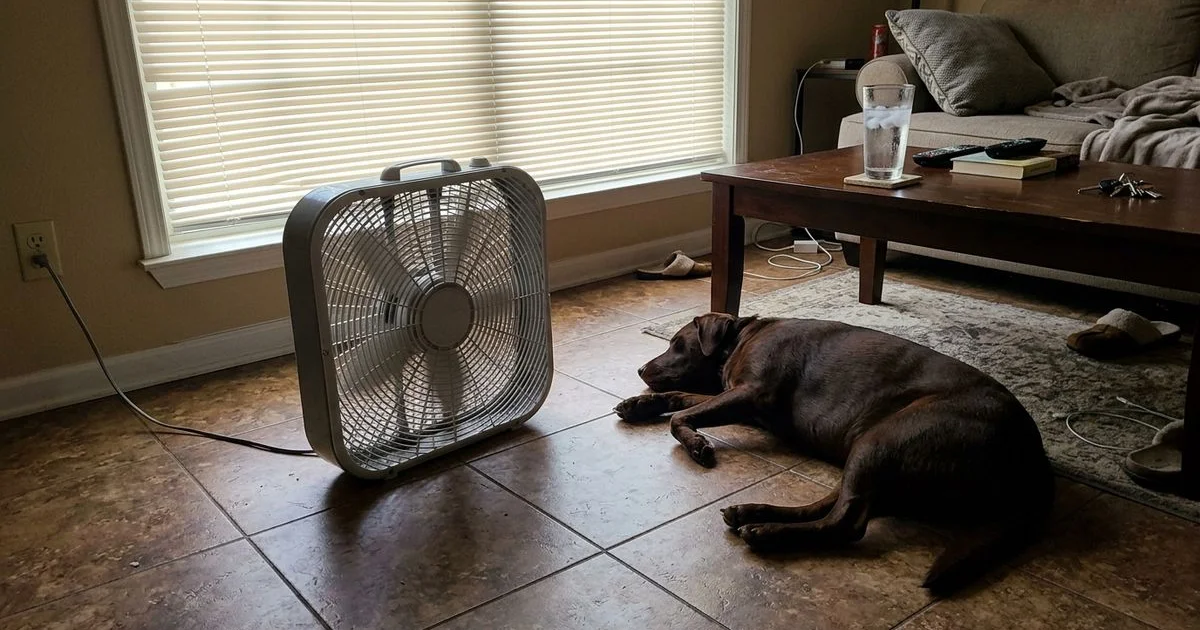
Pets feel the heat too. Give them plenty of water, a cool tile or concrete floor, and shade. Dogs with short noses and older pets are most at risk.
Shut Off a Leaking or Iced System
If the AC is still running but blowing warm air, turn it off at the thermostat. Running with low refrigerant or a dead outdoor fan can damage the compressor, which turns a moderate repair into an expensive one.
- Ice on the lines or coil: turn cooling off, run the fan to start thawing, and put towels around the indoor unit for meltwater.
- Water on the floor or ceiling: turn the system off, move valuables, soak up water and put a bucket under any drip. See AC leaking water.
- Burning smell or sparks: turn the system off at the breaker and tell the contractor.
Keep the House as Cool and Dry as You Can
- Close blinds and curtains, especially on the south and west sides.
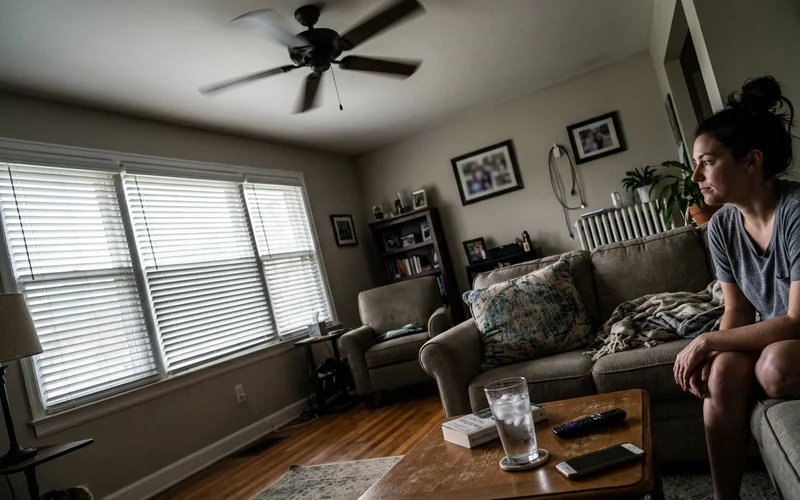
- Run ceiling fans counterclockwise to push air down.
- Use box fans to pull cooler air in at night if it is cooler outside, and close up again in the morning.
- Avoid adding heat: skip the oven, dryer and dishwasher heat-dry.
- Run a portable dehumidifier if you have one. It will not cool the house, but it slows the humidity climb that leads to musty smells and mold.
Have This Ready for the Contractor
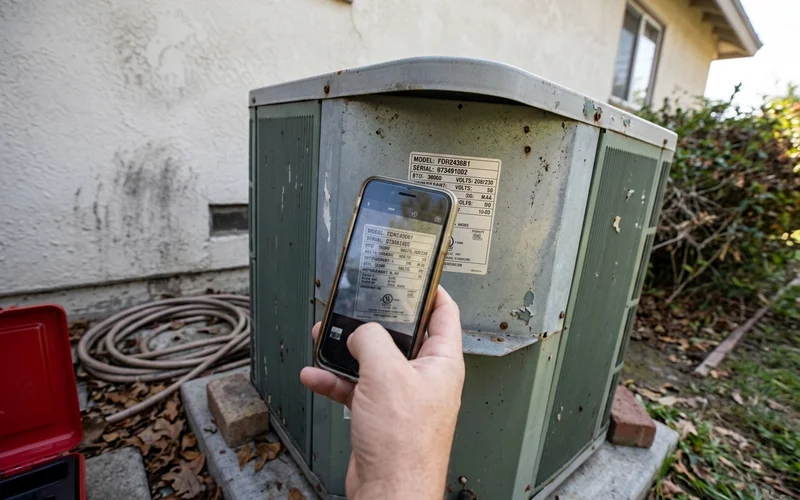
A few details help the contractor bring the right parts and diagnose faster:
| Detail | Where to find it |
|---|---|
| Model and serial number | Data plate on the side of the outdoor unit; snap a photo |
| Indoor unit model | Label inside the air handler door or on the cabinet |
| Symptoms | Warm air, not starting, leaking, iced, noise, smell |
| When it started | After a storm? Gradually? Suddenly? |
| What you already tried | Filter changed, breaker reset, thermostat batteries |
| Access | Gate codes, lockbox, condo building and unit, pets in the house |
What the Visit Usually Looks Like
When the contractor arrives, they will usually:
- Ask what happened and check the thermostat
- Inspect the indoor unit, filter and drain
- Check the outdoor unit’s electrical components, fan and compressor
- Measure refrigerant pressures if needed
- Explain what failed and give you a free estimate before any work
Many common repairs, such as a capacitor, contactor or drain clog, can be done on the spot. Bigger parts may need to be ordered. If the system is old or the repair is expensive, ask for a replacement quote too.
Protecting the House From Humidity
Heat is the immediate danger, but humidity does the slow damage. In a closed-up coastal home without cooling, moisture builds quickly, and it gets into drywall, carpet, furniture and closets.
While you wait:
- Keep interior doors open so air moves through the house.
- Run bathroom exhaust fans after showers, and avoid drying clothes indoors.
- Use a portable dehumidifier if you have one, especially in bedrooms and closets.
- Do not open every window on a humid afternoon. Outdoor air in July can be wetter than the air inside. Open windows only if it is cooler and drier outside, usually late at night.
- Wipe up any water around the indoor unit right away so it does not soak into floors or baseboards.
If the AC will be down more than a day in summer, mention it to the contractor. They may be able to get the system running temporarily while a larger part is ordered.
Common Mistakes While Waiting
- Resetting a breaker over and over. If it trips twice, leave it off.
- Chipping ice off a frozen coil. Let it thaw on its own.
- Adding refrigerant from a store-bought can. It can damage the system and hide the real leak.
- Opening the outdoor unit’s electrical panel. Capacitors can hold a dangerous charge.
- Running a system that is blowing warm air. It can damage the compressor.
Rental and Out-of-State Owners
If guests are in the house or checking in soon, tell us the check-in time when you call. The contractor can coordinate with your property manager, send photos of what they find, and give a written estimate so you can approve the repair by phone before they start.
Need Help Now?
Call (251) 270-2500. The phone is answered 24/7, same-day service is available in most of South Baldwin, and there is no referral fee.