
We see this exact scenario play out constantly across South Baldwin County. You set the thermostat, wait, and absolutely nothing happens. No click, no fan, and no sound from the outdoor unit.
Our dispatchers often find that an ac wont turn on due to a simple setting or a tripped switch. You should work through the safe checks below first.
If those steps do not solve the problem, you can always reach out for 24/7 AC repair.
Safe First Checks
1. Thermostat settings and batteries
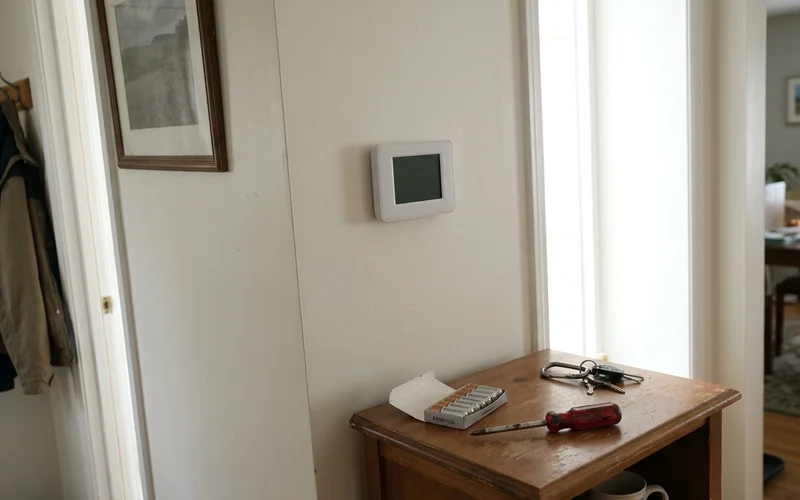
We estimate that nearly 20 to 25 percent of dead AC calls are resolved by simply replacing the thermostat batteries. A blank screen on your Honeywell or Ecobee wall unit is a clear giveaway. Fresh AA or AAA batteries will often bring the system right back to life.
Our technicians always check the basic settings first before opening any equipment. Smart thermostats sometimes drop their Wi-Fi connection or default to an “away” schedule. Rental owners should verify whether a vacationing guest accidentally locked the control panel.
- Is the system set to COOL, not HEAT, FAN, or OFF?
- Is the setpoint at least three degrees below the current room temperature?
- Is the display screen completely blank or dim?
- Does your smart app show an active network connection?
2. The breaker panel
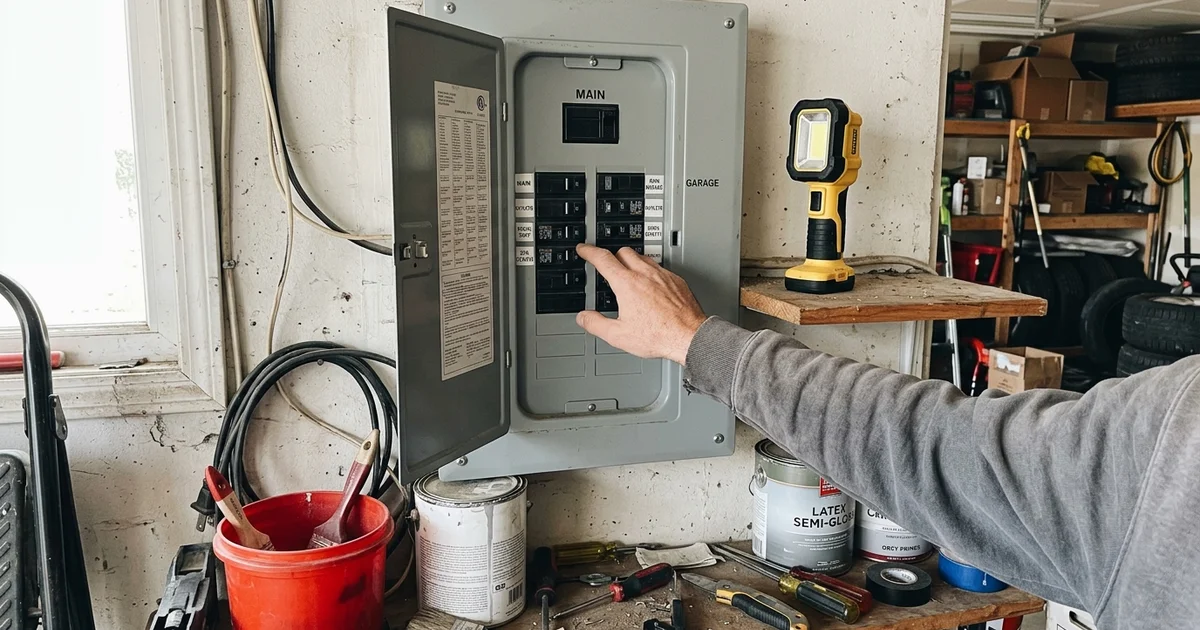
We frequently encounter systems that appear dead simply because a safety breaker tripped. Most systems have two separate breakers for the indoor air handler and the outdoor condenser. Your outdoor condenser requires a dedicated 30 to 40-amp double-pole breaker to handle the startup surge.
Our advice is to locate a tripped breaker, which sits slightly off-center, and switch it fully to the OFF position before firmly pushing it back to ON. You must only attempt this reset once. An ac tripped breaker that immediately flips again indicates a serious electrical fault, and forcing it can create a fire risk.
3. The outdoor disconnect
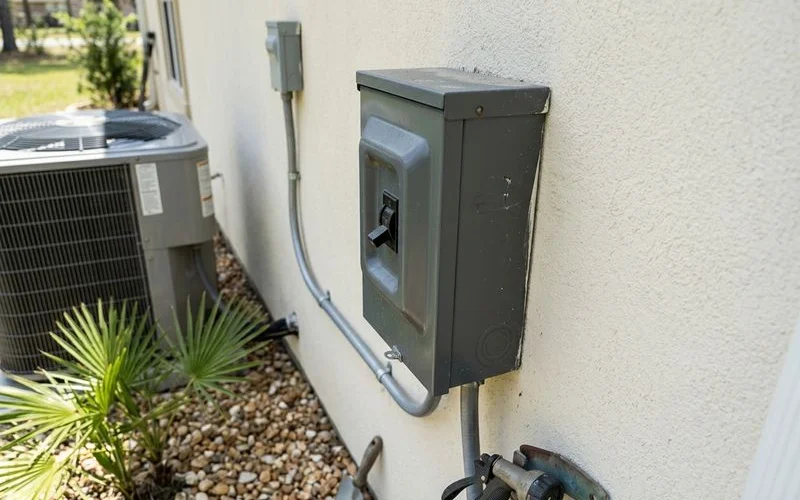
We always inspect the small gray box mounted on the exterior wall near the outdoor condenser. This disconnect box, often made by brands like Eaton or Square D, contains a pull-out block that cuts high-voltage power. Lawn crews or pressure washers sometimes pull this T-handle for safety and forget to push it back in.
Our crews find this happens frequently during heavy summer landscaping months. Make sure the block is fully seated in the ON position. You should never open any panels behind the disconnect cover itself.
4. The float switch
We know from daily field experience that air conditioners act like massive dehumidifiers in this humid coastal climate. A standard three-ton unit can pull 10 to 20 gallons of water out of your indoor air every single day. A float switch, like the popular RectorSeal Safe-T-Switch, monitors the drain pan and cuts power to protect your ceiling if water backs up.
Our plumbers and HVAC teams see these switches trip constantly when algae clogs the main drain line. You should check for standing water in the primary pan under the indoor unit or the secondary pan in the attic. If the pan is full, our AC leaking water guide explains the exact steps to clear the clog.
5. The furnace or air handler door
We have taken countless service calls just to push an access door closed by a half-inch. Many indoor air handlers feature a tiny black safety switch that kills the power if the main cabinet panel is loose. A recent DIY filter change is usually the culprit.
Our pros recommend giving the blower door a firm push with both hands to ensure it is seated flush against the frame. The system will remain off until that switch is fully depressed. Make sure no wires are pinched in the door track.
Faults That Need a Licensed Contractor
We usually narrow a persistent power loss down to a few specific internal failures. If the safe checks above do not bring the unit back online, an electrical component is likely compromised. A licensed technician is required to diagnose and safely repair these specific issues.
Failed capacitor
We replace failed capacitors more than almost any other part during the Gulf Coast cooling season. This small metal cylinder stores electricity and sends a massive voltage jolt to start the compressor and outdoor fan. A capacitor failure stops the entire cooling process in its tracks.
Our local climate takes a heavy toll on these electrical parts, leading to several clear warning signs.
- A loud humming noise from the outdoor unit without the fan spinning.
- The top of the silver metal casing bulging upward like a swollen can.
- A completely dead system that refuses to turn on.
While a run capacitor might last 10 years inland, the combination of extreme heat and coastal salt air often kills them in 5 to 7 years. Noticing bad ac capacitor signs early can save your compressor from overheating.
Burned or stuck contactor
We frequently find damaged contactors when investigating an ac not turning on. The contactor is a 24-volt mechanical relay switch that physically closes to send high-voltage power to the outdoor components. Pitted or burned electrical contacts will stop the unit from starting entirely.
Our technicians also pull hundreds of dead insects out of these switches every year. Fire ants are attracted to the electrical hum and often swarm the relay, blocking the connection with their bodies. A visual inspection by a pro confirms this issue quickly.
Blown fuse on the control board
We check the main control board immediately if your indoor thermostat screen goes completely blank. A small automotive blade fuse, usually 3-amp or 5-amp, protects the delicate indoor circuitry. A short circuit somewhere in the system instantly blows this fuse.
Our diagnostic process usually traces this back to a nicked thermostat wire vibrating against copper plumbing. The whole system goes completely dead until the short is repaired and the fuse is replaced. Bypassing this fuse will fry the entire circuit board.
Surge damage and wiring problems
We respond to dozens of fried control boards immediately following summer thunderstorms in Foley and Summerdale. Lightning strikes and local power flickers easily overwhelm the sensitive electronics inside a modern condenser. If your system died right after a severe weather event, you can reference this guide on checking your AC after a hurricane or power outage.
Our repair teams also hunt down wiring problems caused by specific environmental exposures.
| Coastal Hazard | Typical Effect on AC System |
|---|---|
| Salt Air Corrosion | Degrades copper wiring, causing intermittent power loss. |
| Lightning Strikes | Overwhelms and fries the sensitive indoor control board. |
| Pest Damage | Rodents chew voltage lines, leading to a dead system. |
These hazards rapidly degrade exposed components. A professional inspection will locate the exact point of the short circuit.
Compressor failure
We always consider the compressor as a last resort because it is the most expensive component in the cooling system. This large motor pumps refrigerant through the copper lines to remove heat from your home. A compressor that shorts to ground or mechanically locks up will pull massive Locked Rotor Amps.
Our amp meters often read a massive power spike right before the system completely shuts down. This intense electrical draw is exactly what causes the breaker panel to trip repeatedly. Replacing it requires recovering the refrigerant and welding in a new unit.
Never open the electrical panel
We urge you to take these electrical hazards very seriously. The outdoor unit carries 240 volts, and capacitors hold a charge even when the main power is off. Opening panels, touching capacitors, or bypassing switches is extremely dangerous. You should stop your troubleshooting at the thermostat, breaker, disconnect, and float switch checks.
What to Tell the Contractor
We can get the right replacement parts to your house much faster if you provide specific details over the phone. You should call (251) 270-2500 and have a few pieces of information ready for the dispatcher. Your exact town and property type, like a condo or a single-family home, helps establish the fastest routing.
- The specific symptoms: is it completely dead, humming, clicking, or dead after a storm?
- The breaker status: did a breaker trip, and did it trip again after a reset?
- The water situation: is there any standing water in the indoor drain pan?
- The data plate: can you read the model number printed on the outdoor unit sticker?
Our technicians provide a free estimate and a full diagnostic explanation before any actual work begins. Standard capacitor, contactor, and fuse repairs are usually fast fixes that take less than an hour. For a realistic look at general Alabama price ranges, see how much AC repair costs on the Gulf Coast.
We answer our phones 24/7 with no hidden referral fees attached. Same-day service is available across most of South Baldwin County. A fast fix gets your family back to comfortable temperatures before the afternoon heat peaks, so do not hesitate to call.